A reflection on thirty-four years of standing between two worlds—and why the job description finally had to change.
The Interview That Defined a Career
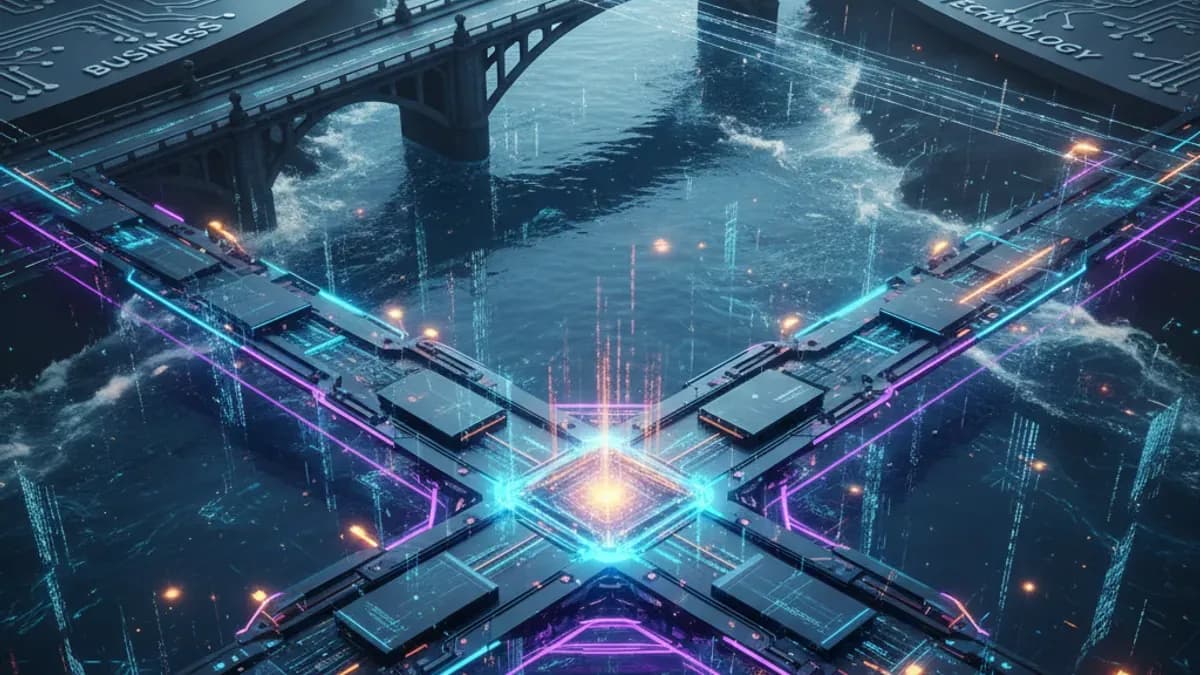
In 1992, I sat across from a scholarship committee and described my future self as a bridge. Not an engineer. Not a programmer. Not a manager. A bridge. My role, I explained, would be to stand between business users and technology users, translating intent into implementation and constraints into strategy.
The interviewer smiled. "That's a very mature vision for an seventeen-year-old."
He was right to be impressed—but only because he couldn't see what was coming. At the time, "bridge" meant linguist. It meant someone who learned two dialects of corporate life and shuttled meaning between them. That was enough then. Business spoke in outcomes. IT spoke in infrastructure. The gap was wide, the vocabulary was foreign, and the bridge-builders who could cross it were rare.
What I didn't know—what no one knew—was that the river beneath that bridge would not stay still. Over three decades, it would deepen, accelerate, and eventually flood the very banks it separated. Cloud would dissolve the boundary between "business systems" and "technical systems." APIs would turn custom development into configurable plumbing. And AI, most dramatically of all, would automate the translation layer itself.
The bridge I envisioned still stands. But the traffic crossing it has changed entirely. And so has the structure required to hold it.
Phase One: The Translation Bridge (1992–2010)
For nearly two decades, the bridge-builder was a mediator.
Business analysts wrote requirements documents that translated stakeholder desire into functional specification. Systems integrators decoded legacy COBOL into board-level risk assessments. Consultants like myself spent careers becoming bilingual—fluent in both P&L statements and packet loss, in customer journeys and JSON schemas.
The value proposition was straightforward: I understand both sides so you don't have to.
This was genuinely necessary. Enterprise software was opaque. Business logic was buried in code that only priests could read. The business-technology boundary was a cultural one, and culture requires interpreters.
But the model had a hidden cost. Translation is inherently lossy. Every requirement document is a compression algorithm that discards nuance. Every technical explanation dumbed down for a board meeting loses fidelity. The bridge was narrow. It carried words, not wisdom. And it created a dangerous dependency: organizations that could not function without their translators.
Phase Two: The Integration Bridge (2010–2022)
Then the river shifted.
Cloud infrastructure meant a marketing director could spin up a server without asking IT. SaaS platforms meant business units could buy their own tools. APIs turned "integration" from a six-month project into a configuration exercise. The boundary between business and technology did not disappear—it fractured. Suddenly there were a thousand small bridges instead of one central one.
During this era, the bridge-builder evolved into an integrator. The job was no longer just translation; it was connection. Making Salesforce talk to the ERP. Ensuring the mobile app respected the compliance framework. Building middleware that allowed business velocity without technical anarchy.
The value proposition shifted to: I connect the pieces so the whole system works.
But even this model was reactive. The bridge-builder was still a response to fragmentation, not a driver of coherence. We were plumbers of the digital enterprise, patching leaks between systems that business had purchased and IT had inherited.
Phase Three: The Value-Add Bridge (2023–Present)
Which brings us to now.
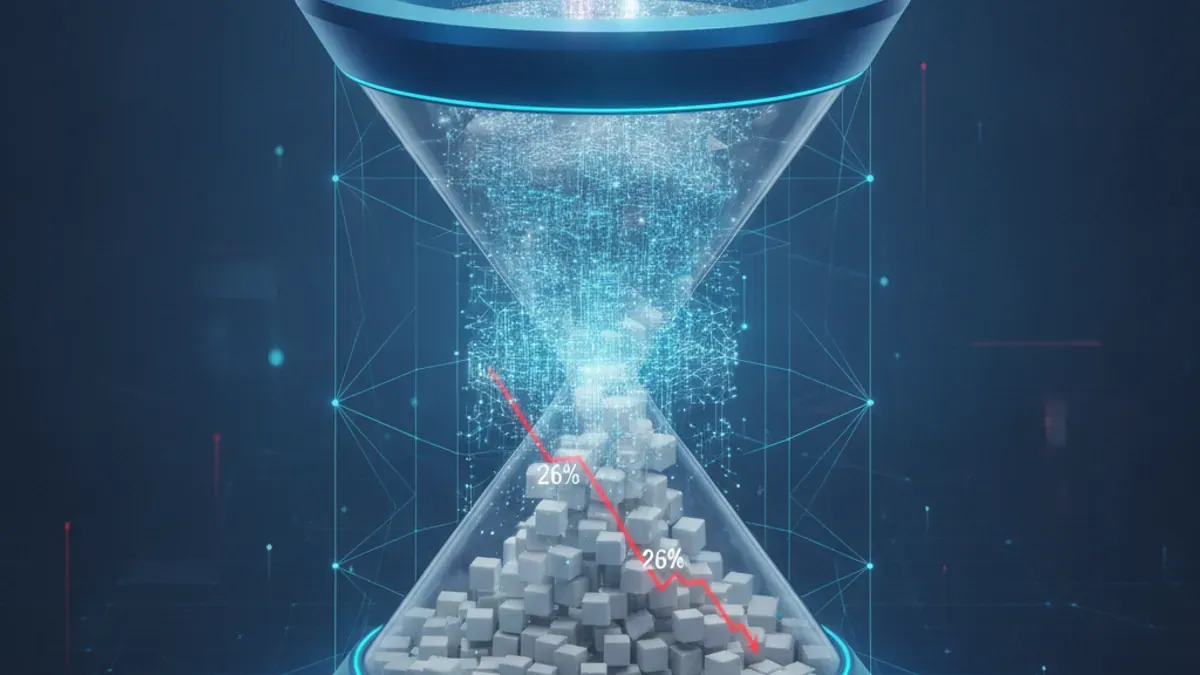
AI has collapsed the translation function with shocking speed. A Large Language Model can today translate a CEO's strategic ambiguity into a technical specification more accurately than a mid-level analyst. It can turn a developer's architecture diagram into a board-ready risk narrative in seconds. The linguistic bridge—the pure act of making one side understood by the other—is now a commodity.
If you are still defining your value as "I speak both languages," you are competing with software that works 24/7, costs pennies per thousand words, and never forgets a technical acronym.
So the bridge had to become something else entirely.
The new bridge is not a translator. It is a value architect.
What the Value-Add Bridge Actually Does
To understand the change, consider what happens when the same business request hits the old bridge versus the new one.
The Request: "We need an AI chatbot for customer service."
The Old Bridge (Translator): Documents requirements. Translates "chatbot" into technical components: NLP engine, knowledge base, CRM integration. Delivers a spec. Ensures the business understands what the tech team will build.
The New Bridge (Value Architect): Asks entirely different questions. What customer pain point justifies the investment? Which queries are high-value versus high-volume? How does this change the staffing model? What is the governance framework when the AI gives wrong answers? How does this integrate with the existing loyalty program data architecture? What is the competitive moat if every rival deploys the same tool?
The new bridge does not merely carry the request across. It reframes the request before it crosses. It injects strategic architecture into operational demand. It ensures that what arrives on the technical side is not just understood, but worth building.
Here is how the function has changed in concrete terms:
1. From Language to Logic
The old bridge managed vocabulary. The new bridge manages causality. It does not ask "What do you want?" It asks "What business outcome are we optimizing for, and what are the second-order effects on operations, compliance, and data architecture?"
2. From Handoff to Orchestration
The old bridge ended at the shoreline. It dropped a package on the technical bank and walked away. The new bridge spans the entire lifecycle. It orchestrates how AI initiatives align with quarterly revenue cycles, how legacy modernization maps to customer retention, and how "innovation" does not become a euphemism for ungoverned technical debt.
3. From Neutral Conduit to Algorithmic Authority
Perhaps the most profound shift. The old bridge prided itself on neutrality—faithfully carrying meaning without distortion. The new bridge brings methodological authority. It introduces systemic design patterns, governance frameworks, and architectural standards that neither pure business nor pure technology functions possess alone. Business has intuition. Technology has capability. The bridge brings structured wisdom about how to combine them without breaking the organizational culture.
4. From Human Router to Human Curator
AI now handles the routing. The bridge-builder's job is curation—deciding which problems deserve architectural attention, which solutions deserve investment, and which automated outputs deserve human validation. The bridge is no longer the busiest path; it is the smartest path.
A Real-World Example: The Hospitality API
This is not philosophy. It is the operating reality of my work today.
When a hotel group asks for a "booking API," the old bridge would translate that into endpoints, payloads, and authentication protocols. The new bridge recognizes that the request is actually about revenue infrastructure.
So the value-add bridge designs for:
- Coexistence: How does this API integrate with a legacy PMS that still runs on-premise?
- Compliance: How does guest data flow through PCI-DSS and GDPR frameworks across multi-premise deployments?
- Commercial architecture: How does the API enable dynamic pricing without cannibalizing direct booking margins?
- Operational reality: How does the front-desk staff—often the least technical person in the building—interact with failures in this system?
The deliverable is not a translation. It is an orchestrated value system that happens to include an API.
What This Means for the Next Generation of Bridge-Builders
If you are entering the industry today and want to build a career on this boundary, my advice is this: Stop studying how to explain technology to businesspeople. Start studying how to engineer value across the boundary.
The skills that matter now are not bilingualism. They are:
- Systems thinking: Can you model how a business decision ripples through technical architecture, organizational culture, and regulatory compliance?
- Governance design: Can you build frameworks that allow AI and human judgment to coexist with accountability?
- Value modeling: Can you articulate why a technical investment will or will not create competitive advantage in three years?
- Architectural authority: Can you introduce standards and patterns that outlast the current project and the current vendor?
The interviewer in 1992 was impressed by vision. Today, he would be impressed by architectural depth.
The River Has Not Stopped
Thirty-four years later, I still stand on that bridge every day. But I no longer spend my time shouting translations across the water, hoping the meaning survives the journey.
Instead, I am reinforcing the structure for loads it was never designed to carry. I am adding new spans so that AI-generated insights and legacy system realities can coexist without collision. I am ensuring that what crosses over is not merely understood by both sides, but transformative for the organization that owns it.
The bridge remains. But it is no longer a translation device.
It is a value creation engine. And honestly? The seventeen-year-old me would have thought that was even cooler.
What kind of bridge are you building in your organization? One that translates—or one that transforms?