Google Says GEO Is Just SEO. They're Right—and It's the Most Expensive Truth You'll Ever Believe.
TL;DR: Google's official position is that optimizing for generative AI is just SEO. Technically correct inside Google's own surfaces. Strategically catastrophic everywhere else. Google debunked six popular GEO tactics and was right on all six. But the real battlefield isn't on your website—it's across Reddit, G2, review sites, and earned media that Google's AI, ChatGPT, and Perplexity all pull from. Google can't write a guide for that layer because they don't control it. So they defined the problem down to the part they own, called the rest unnecessary, and dared you to believe them. Stop optimizing for Google's index. Start optimizing for the source universe every AI actually pulls from.
James here, CEO of Mercury Technology Solutions. From my office in Wanchai, Hong Kong — July 2026
On June 5, Google updated its documentation and declared, in its own words: optimizing for generative AI is optimizing for the search experience, and thus, still SEO. Same ranking systems. Same quality signals. No separate playbook needed.
They even named six "GEO tactics" and debunked them one by one. llms.txt files? Not a special signal. Content chunking into AI-bites? Unnecessary. AI-specific rewrites? Pointless. Special AI schema? Not needed. Artificial brand mentions? Ignored. Over-engineered markup? Waste of time.
On those six points, Google is correct. If a vendor is charging you to auto-generate llms.txt files, that money is in the bin. Google did the industry a favor by killing the placebo economy.
But here's where the honesty quietly stops.
The Convenient Half-Truth
Google's claim is: "it's all still SEO, because our AI runs on our same ranking systems." Read that sentence carefully. It's true, and it's doing an enormous amount of hidden work.
It's only true for Google's own surfaces. AI Overviews and AI Mode run on Google's index. So yes, for those two, good SEO is the foundation. The on-site layer—crawlable, fast, well-structured, original content with real expertise—is genuinely just SEO. Google's guide nails this half, and that half is now table stakes.
But Google is not the only place your buyers are asking questions. And Google conveniently defined "AI search" as "the AI search that happens inside Google."
ChatGPT does not run on Google's index. Neither does Perplexity. Neither does Claude. 800 million people use ChatGPT every week, and when it recommends a B2B tool, it is not consulting Google's ranking systems. It is pulling from Reddit, from communities, from earned media, from a completely different source universe.
Google saying "AI optimization is just SEO" is like Coke saying "winning the drinks market is just about selling more Coke." True inside their walls. Silent about the entire rest of the market.
The 13.7% Problem
Now here's the part that should actually bother you.
Even inside Google, the "it's just SEO" line breaks. Ahrefs compared Google's own two AI surfaces—AI Overviews and AI Mode—across 540,000 query pairs. They reached the same answer 86% of the time. They cited the same sources just 13.7% of the time.
Let me say that again. Google has two AI engines, built on the same index they told you to optimize for, and they pull from almost entirely different sources. If "just do SEO" fully solved it, that number wouldn't be 13.7%. It would be near 100%.
Good SEO gets you into the index. It does not decide which of Google's own AIs quotes you. The ranking system gets you in the door. The AI's retrieval logic decides whether you're in the room.
Follow the Incentive
So why would Google frame it this way? The answer is always the same: follow the incentive.
If AI search is "just SEO," then the answer to every AI visibility question is: keep optimizing for Google, keep trusting Google's systems, keep playing inside Google's box. It quietly re-centers the entire AI search conversation back onto the one surface Google owns, controls, and monetizes.
Google also cannot tell you the real answer, because the real answer lives outside Google's control. Google cannot write a guide for how Reddit talks about you. It cannot document how ChatGPT weighs a G2 review. It cannot publish a playbook for building community sentiment on LinkedIn. So it defines the problem down to the part it can own, calls the rest unnecessary, and hopes the market is too lazy to notice.
The easy half is solved. The hard half is the whole game.
The Two Jobs of AI Visibility
Here's the honest version Google won't print.
AI visibility splits cleanly into two jobs.
Job 1: The on-site job. Crawlable, fast, well-structured, original content with real expertise. Google's guide nails this. It genuinely is just good SEO. This half is now table stakes. Everyone in your category is doing it, or will be within six months. It is not a competitive advantage. It is the price of admission.
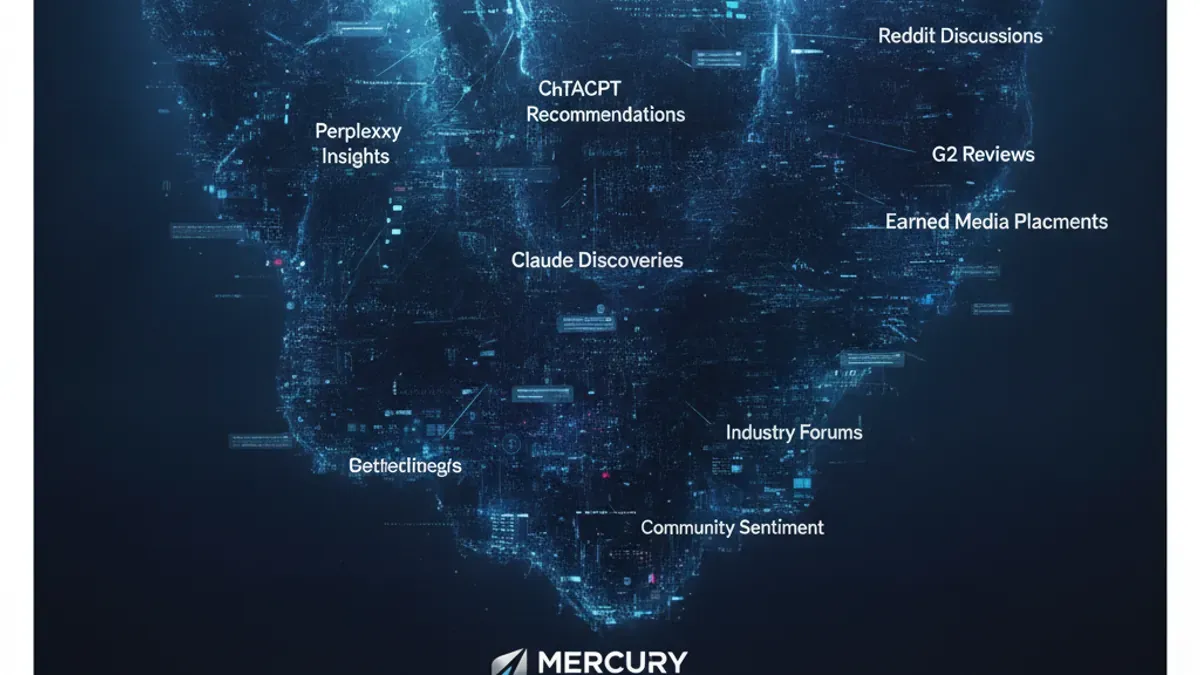
Job 2: The off-site job. How your brand is described across the independent sources every AI—including Google's own—pulls from. Reddit, review sites, earned media, community sentiment, forum discussions, podcast transcripts, academic citations, open-source contributions.
This is where the recommendation actually gets decided. And Google's guide is completely silent on it, not because it doesn't matter, but because Google can't control it and therefore can't take credit for it.
The 2026 Equation: On-site SEO = Commodity. Off-site reputation = Competitive moat. The first gets you indexed. The second gets you recommended.
Who's Right in the GEO vs. SEO Fight? Everyone. And That's the Trap.
The SEO purists saying "GEO is a scam, it's all just SEO" are correct about the on-site layer and blind to the off-site one. The GEO hype merchants selling llms.txt files and AI-specific schema are correct that AI changes things and wrong about which things. Google's framing lets the purists feel vindicated while quietly serving Google's interests.
The truth is less tribal and more uncomfortable: the on-site work is now a commodity Google itself documented for free. Your entire competitive edge in AI search has moved to the off-site layer nobody can hand you a guide for.
This is exactly why we built the GAIO framework at Mercury. Generative AI Optimization is not about schema markup or llms.txt. It's about systematically building the Answer Assets—comprehensive, authoritative, distributed content—that LLMs actually retrieve when generating recommendations. The keyword is not "optimization." The keyword is "citability." Can an AI model find you, understand you, and trust you when it constructs an answer in a context you don't control?
What You Should Do Instead
If you're still framing your AI visibility strategy around Google's index, you're preparing for the last war. Here's the reframe:
Stop optimizing for Google's ranking systems. Start optimizing for the source universe every AI pulls from.
Google's AI Overviews and AI Mode are not the only surfaces. They are not even the most important surfaces for B2B buyers. ChatGPT, Perplexity, Claude, and a dozen specialized AI agents are making recommendations based on a corpus that is decoupled from Google's index. If you are not present, accurately described, and positively referenced in that corpus, you are invisible to the AI era—regardless of your PageRank.
The on-site work still matters. It is the foundation. But foundations don't win wars. They prevent collapse. The war is won in the off-site layer: reputation, community presence, earned authority, and the distributed signals that tell an AI model "this brand is the answer to this question."
Google isn't lying. They are telling you a true thing that happens to keep you looking exactly where Google wins, and away from the layer that decides whether ChatGPT, Perplexity, and even Google's own AI Mode recommend you.
When the most powerful company in search tells you the new thing is actually the old thing they already dominate, read it twice.
Mercury Technology Solutions: Accelerate Digitality.
Published by Mercury Technology Solutions | mtsoln.com | Systemic Growth Architecture