TL;DR: OpenAI just officially killed Sora, shutting down the video generation platform and its dedicated app. Most analysts are blaming Chinese competitors like Jimeng 2.0 or citing massive compute costs. They are wrong. Sora wasn't killed by better technology; it was killed by a fatal psychological misalignment with the consumer. OpenAI built a "World Simulator" for elite creators, but consumers just used it to mass-produce disposable, low-quality meme videos (AI Slop). Sora forgot the most important rule of brand architecture: Consumers don't buy a product for what it does; they buy it for who it makes them become.
James here, CEO of Mercury Technology Solutions. Hong Kong — March 29, 2026
This morning, the tech world woke up to the news that OpenAI is officially sunsetting Sora.
Less than two years ago, Sora's launch shattered our understanding of generative video. The cinematic realism, the physics simulation, the ability to seamlessly insert yourself into a Marvel movie—it was staggering. It hit a million downloads in less than five days.
And today, it is dead.
If you are a CEO or a Product Manager, you need to study this failure closely. Sora did not lose a technology war. Right up until they pulled the plug, the video quality was still industry-leading. It wasn't crushed by Chinese competitors like Kling or Jimeng.
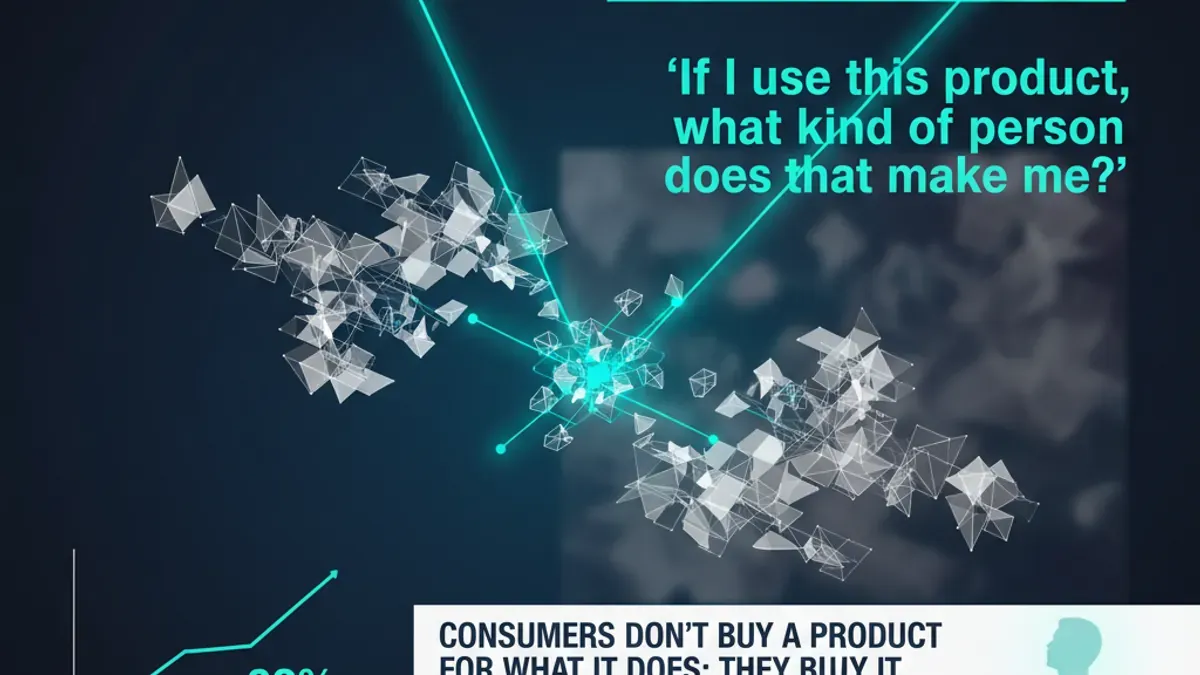
Sora was killed by a single, unanswered question in the mind of the consumer: "If I use this product, what kind of person does that make me?"
1. The Fatal Pivot: "Playing" vs. "Using"
When Sora launched in late 2024, the world was mesmerized. Consumers spent hours generating videos of themselves standing next to Darth Vader or creating hyper-realistic, absurd memes to send to their friends.
But they were just playing with AI. "Playing" is driven by novelty. And novelty has a strict expiration date.
By late 2025, the consumer market shifted gears. They stopped "playing" and started "using." They started doing the brutal math of utility: Does this tool actually solve a problem for me, or make me look better in my professional or social life? Sora completely missed this transition. They kept optimizing for the "Wow!" factor—the deepfakes, the Cameo integrations, the novelty features. When the novelty wore off, consumers asked, "And then what?"
There was no "then what." Downloads plummeted 32% in December 2025 and another 45% in January 2026. The competitors didn't steal the users; the users simply walked away.
2. The Brand Misalignment (The "AI Slop" Trap)
Here is the architectural failure.
OpenAI explicitly positioned Sora as a "World Simulator"—a high-end, professional tool designed for elite filmmakers, creative directors, and visionaries.
But what did the actual users do with it? They used it to mass-produce cheap, low-effort, AI-generated garbage. By early 2026, industry reports showed that these low-quality, mass-produced AI videos (dubbed "AI Slop") accounted for 21% of all new recommended short-form content globally.
Sora's brand identity fractured. OpenAI thought they were building a Ferrari for professional drivers. The consumers treated it like a clown car.
When a user posted a Sora video, they didn't look like an "Elite Creator." They looked like a spammer adding to the ocean of internet garbage. Because the output made the user look cheap, the user refused to pay a premium subscription for it. If your product makes your user look bad, your business model is mathematically dead.
3. The Collapse of the Trust Architecture (The Disney Exit)
The final nail in the coffin wasn't a lack of users; it was a lack of institutional trust.
Late last year, Disney signed a massive licensing deal with Sora, allowing users to legally generate videos using over 200 Marvel, Pixar, and Star Wars IPs. Just before Sora shut down, Disney abruptly terminated the partnership.
People assume Disney was just protecting its copyright. That is a surface-level read. Disney is the most protective brand architecture company on earth. They asked OpenAI a simple question: "Can you guarantee that when a consumer sees Mickey Mouse in a Sora-generated video, they will still feel they are interacting with a premium, valuable brand?"
Because Sora was drowning in "AI Slop," OpenAI could not make that guarantee. So Disney walked. If you cannot build a Trust Architecture that protects the prestige of your enterprise partners, you cannot survive in the B2B space.
Even OpenAI's internal memo admitted the truth: "We spread ourselves too thin across too many consumer applications. We must simplify."
Conclusion: The "Who Am I?" Test
When I consult with enterprise founders, I always ask them one specific question, and they almost always freeze:
"When a customer finishes using your product, how do they look in front of their peers?"
Most founders answer by talking about their product's CP value, their server uptime, or their amazing UI. They are answering the wrong question. Consumers do not make permanent space in their lives for a brand because of its features. They keep a brand because it successfully transforms them into the person they want to be.
Sora spent billions of dollars building the most advanced video physics engine on the planet, but they completely forgot to build an identity for their user.
Mercury Technology Solutions: Accelerate Digitality.