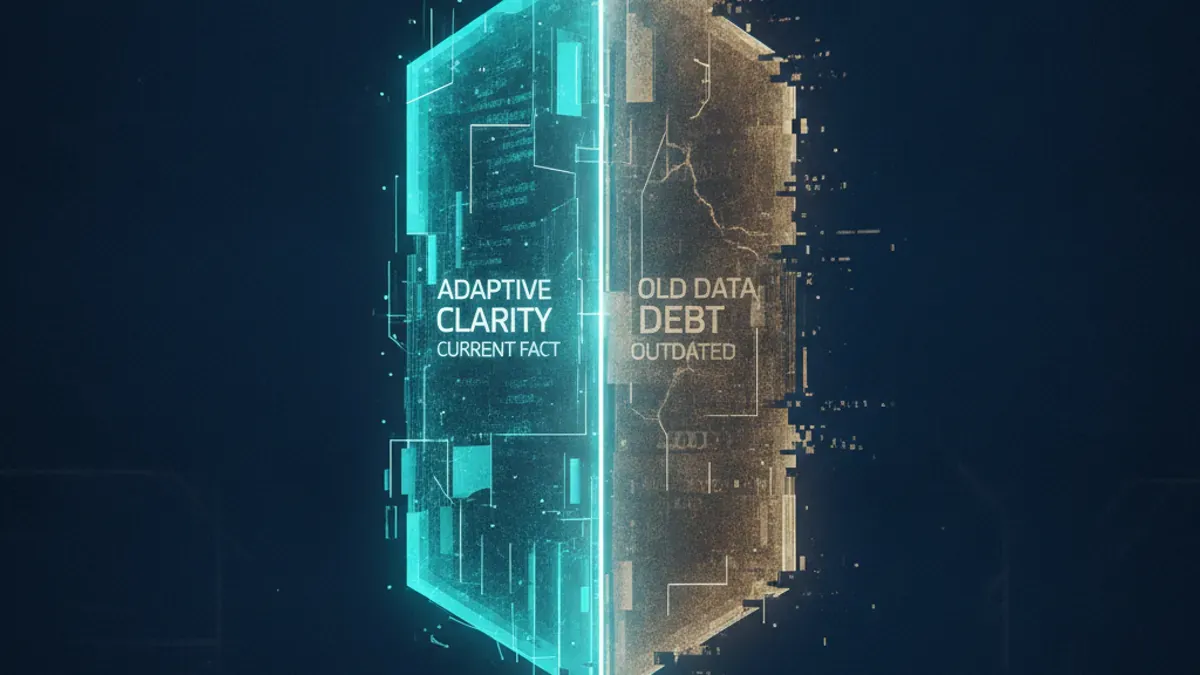
TL;DR: Everyone is currently evaluating OpenClaw (the open-source AI agent sweeping the market) using obsolete metrics. They are arguing about who has the better "system prompt," the better memory matrix, or the coolest tools. They are completely missing the point. OpenClaw’s breakthrough isn't that it is a smarter AI; it is that it has successfully productized system design. However, modularity alone is not a defensible moat. If you want to survive the Agentic Era of 2026, you must stop writing prompts and start building enterprise-grade governance.
James here, CEO of Mercury Technology Solutions. Hong Kong — March 30, 2026
I spent the weekend reviewing the latest architectural debates surrounding OpenClaw (affectionately known as the "Lobster"). Most of the developer community is treating it like a chatbot on steroids. They are obsessing over the prompt engineering and the contextual memory limits.
They are looking at the paint job instead of the engine.
OpenClaw is fascinating not because of its conversational ability, but because it actively modularizes the "system problem." It takes raw capabilities—skills, logic routing, tool calling, and the execution layer—and packages them into a fully runnable, deployable architecture. On the surface, it looks like an AI doing tasks for you. Under the hood, it is the democratization and productization of Systemic Design.
But this raises a massive strategic question: Is this modularity an actual competitive moat?
Here is the architectural reality of why you must build a "system," and why modularity alone will not save you from your competitors.
1. The Systemic Design Perspective: Why a "System" is Essential
To understand why OpenClaw is a threat to legacy software, you must understand why we preach Systemic Design at Mercury.
Large Language Models (LLMs) are inherently probabilistic. They guess the next word. If you rely on a massive, complex "system prompt" to guide an LLM to do a 50-step task, it will eventually hallucinate, crash, or enter an infinite loop. A prompt is fragile.
A System is robust. From a systemic design perspective, a system is essential because it forces deterministic boundaries onto a probabilistic engine.
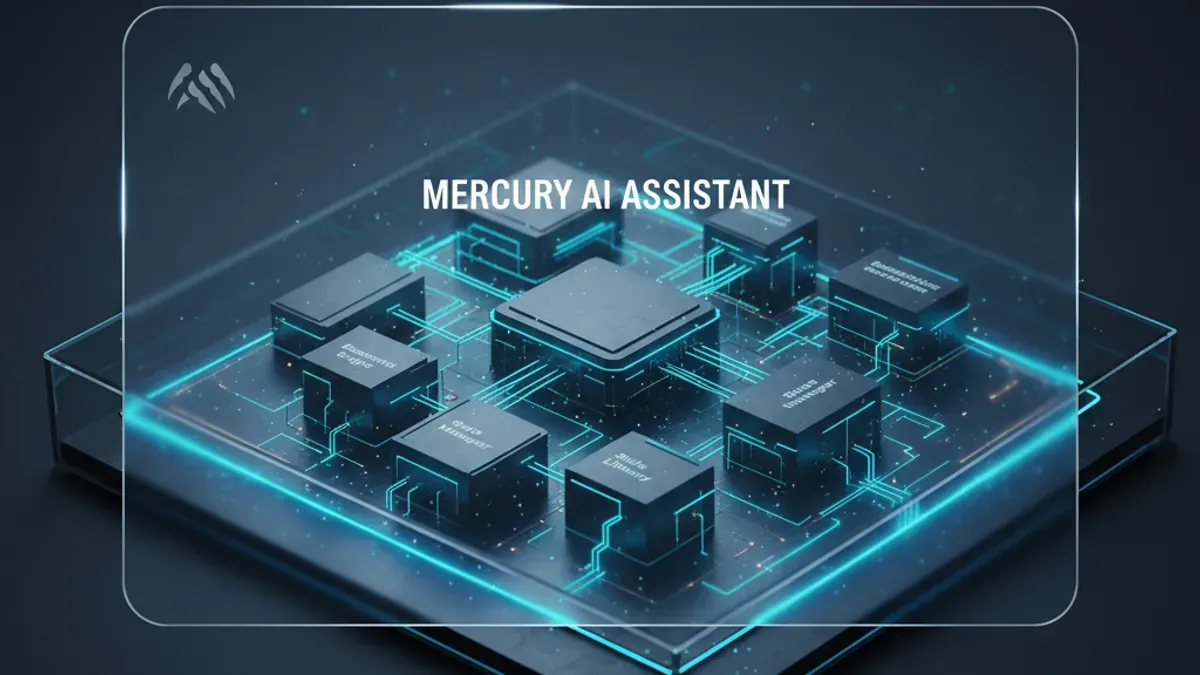
When you modularize an agent like OpenClaw does, you separate the components:
- The Reasoning Engine: The LLM decides what to do.
- The Execution Layer: A deterministic code script actually executes the API call.
- The State Manager: A separate database remembers where the agent is in the workflow.
- The Skills Library: Interchangeable modules defining exactly how to use a specific tool.
Why is this essential? Because if an API breaks, a prompt-driven AI hallucinates a fake answer. A system-driven AI hits a defined error code, halts execution, and safely alerts a human. Systemic design isolates failures, makes components interchangeable (you can swap Claude for DeepSeek without breaking the execution layer), and creates the predictability required for enterprise adoption.
2. The Moat Mirage
Because OpenClaw makes this systemic design so accessible, many founders think they can just fork the repo, slap a UI on it, and build a billion-dollar company.
They are wrong. Modularity is not a moat. The prompt is not a moat.
Look at the broader market. Claude Dispatch and Manus's "My Computer" update are moving in the exact same direction. Every major player is transitioning agents from simple dialogue boxes to executable, schedulable, tool-integrated systems. Packaging skills and logic into a runnable loop is no longer a breakthrough; it is the new baseline standard for 2026.
If everyone has access to the same open-source modular architecture, how do you actually win?
3. The Four True Enterprise Moats
The companies that will dominate the B2A (Business-to-Agent) economy will not be the ones with the cleverest prompts. The gap between a hobbyist running OpenClaw on their laptop and an enterprise deploying it across 10,000 employees comes down to four brutal realities:
- Reliability: Can your system run 100,000 autonomous operations a day without a cascading failure? Modularity is easy; fault tolerance at scale is incredibly hard.
- Governance: This is the ultimate enterprise bottleneck. When an agent autonomously buys a software license or signs a vendor contract, who approves it? You need RBAC (Role-Based Access Control), immutable audit logs, and compliance guardrails. The system must be legally defensible.
- Ecosystem: An agent is only as powerful as the APIs it can touch. The moat belongs to the company that can seamlessly integrate with legacy enterprise databases (SAP, Oracle, Salesforce) without requiring a three-year IT migration.
- Distribution: If you build the best agentic system in the world but Microsoft bundles a "good enough" version directly into Windows Copilot, you lose. Controlling the endpoint where the user initiates the workflow is the ultimate high ground.
Conclusion: Stop Prompting, Start Architecting
The hype around OpenClaw is justified, but the focus is entirely wrong. We are no longer in the era of writing clever paragraphs of text to coax a machine into writing a poem.
We are in the era of systems engineering. If you are building a product, assume your competitors will have the exact same agentic capabilities you do by next Tuesday. Your only survival strategy is to build the governance, reliability, and distribution pipelines that make your system the safest and most deeply integrated choice for the enterprise.
Mercury Technology Solutions: Accelerate Digitality.