The Three-Minute Happiness: What Japanese Department Stores Teach Us About Survival
TL;DR: Japanese department stores peaked in 1991 at ¥9.7 trillion in sales. Today they're below ¥6 trillion. Yet some stores thrive while others die. The difference? The winners stopped selling products and started selling "three-minute happiness" — small, affordable rituals that chain stores can't replicate. This isn't a retail story. It's a lesson in competitive differentiation that applies to any business being commoditized by AI, automation, or scale players.
James here, CEO of Mercury Technology Solutions. Hong Kong — July 2026
Last week I walked past a shuttered department store in Causeway Bay. The windows were papered over, the escalators still. Another one bites the dust. But in Osaka, Hankyu Umeda Main Store just expanded its luxury floor by 1.6x and still can't keep up with demand.
Same industry. Same country. Opposite fates.
The question isn't why department stores are dying. It's why some refuse to.
The Department Store Paradox
Japanese department store sales peaked in 1991 — the exact year the bubble burst. ¥9.7 trillion. Today? Below ¥6 trillion. Over ten prefectures now have zero department stores. Even Tokyo's Shibuya, once dense with them, is down to its last.
But here's what the headlines miss: total Japanese retail is still growing. Department stores aren't losing to a shrinking market. They're losing to a different market.
The killer is SPA — "Specialty store retailer of Private label Apparel." Think Uniqlo. Vertical integration. Design your own clothes, manufacture at scale, sell through thousands of stores. No middlemen. No brand premiums. No "shopping experience." Just product, price, velocity.
In standardized categories — clothing, furniture, electronics — SPA is a machine gun and department stores are bringing swords.
So why do any survive?
Because department stores never competed on efficiency. They competed on something SPA can't touch: curated serendipity.
The Two Paths Forward
Professor Motoshige Ito of Tokyo University laid this out clearly. Department stores have two viable strategies:
Path One: Go Deep on the Wealthy
Foreign buyer services — "gaisho" — where dedicated staff manage ultra-high-net-worth clients. A single VIP event can clear dozens of ¥10 million watches. These customers aren't price-sensitive. They're time-sensitive and relationship-hungry.
This works. It's profitable. But it's narrow.
Path Two: Own the "Three-Minute Happiness"
This is where it gets interesting.
Professor Ito calls it "三分鐘的幸福" — three minutes of happiness. Not luxury. Not necessity. Something in between:
• Trying a new lipstick at the cosmetics counter
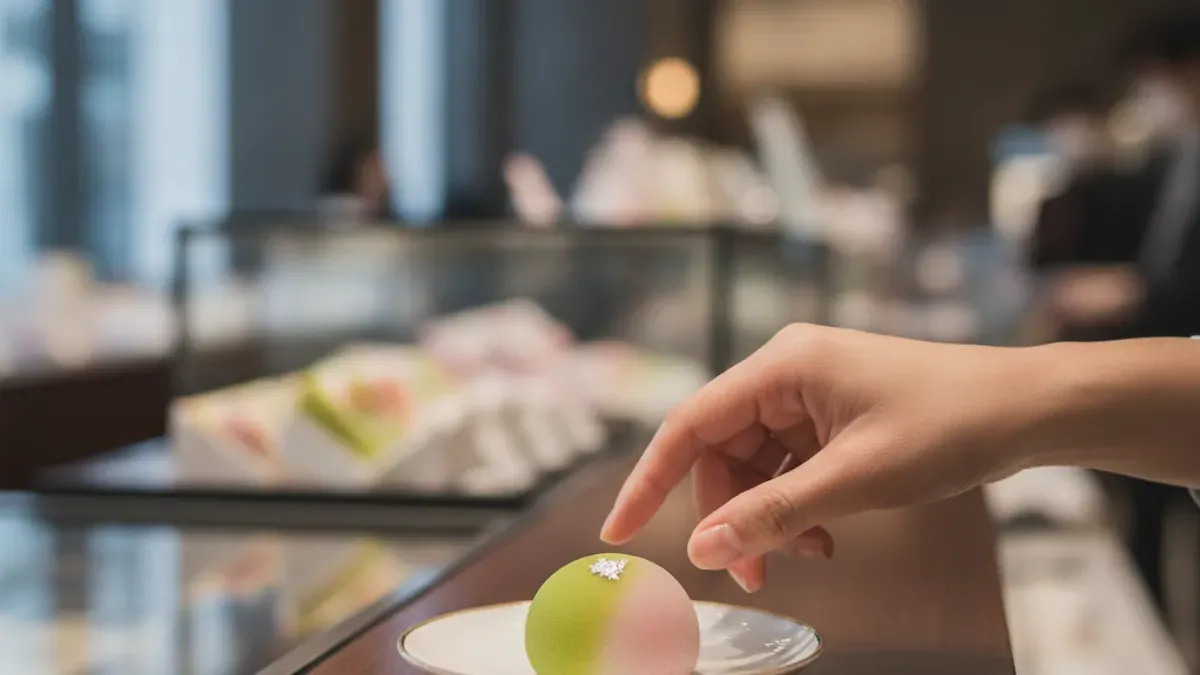
• Buying Hokkaido specialty sweets you read about online
• That seasonal dessert everyone's posting
• A ¥3,000 box of Valentine's chocolates
• Watching your grandchild's face at the toy display
These aren't rational purchases. They're emotional micro-transactions. Small, affordable, repeatable rituals that break the monotony of daily life.
And here's the critical insight: chain stores can't do this.
Uniqlo can sell you a sweater cheaper. Amazon can deliver it faster. But neither can create the context where buying that sweater feels like a small celebration.
The Japanese call the basement food hall "depachika" — department store underground. It's not a grocery store. It's a themed food experience that rotates seasonally, regionally, culturally. You don't go there to restock your fridge. You go there to discover what you didn't know you wanted.
The Hankyu Umeda Playbook
Hankyu Umeda Main Store in Osaka is the second-highest grossing department store in Japan. While competitors shrink, they expand.
Their strategy? Stop organizing by product category. Start organizing by customer values.
They created "Green Age" — a floor that mixes sportswear, cosmetics, and lifestyle products around the theme "living with nature." No men's section. No women's section. No "activewear" aisle. Just: people who care about sustainability and outdoor living.
Sales? Steady growth.
But the real move is upstairs. Floors 9–12 feature a 16-meter atrium called "Festival Square." It hosts rotating cultural exhibitions — British markets, seasonal festivals, regional showcases. You shop, then sit on the open staircase and eat what you bought, surrounded by whatever world they've built that month.
This space took years of failed experiments to get right. The store manager will tell you: the product is secondary. The *stay* is the product.
They're also launching an app that connects credit card data with online behavior — what events you attended, what content you viewed — to power personalized recommendations. Not creepy surveillance. Useful memory. The kind of thing a great shop assistant would naturally do.
The Founder Philosophy That Still Matters
Hankyu's founder, Kobayashi Ichizo, built this company nearly a century ago. His philosophy was simple: "All business serves the masses. Every job ultimately connects to the masses."
In 1929, even customers who ordered only rice with sauce during the Depression got free pickles. No discrimination by spending level.
Today, with wealth inequality widening and middle-class customers drifting toward discount chains, you might think Kobayashi's "mass-first" philosophy is dead. Hankyu's current president, Yamaguchi Toshihiko, disagrees.
He's not abandoning the middle. He's redefining it.
"People who pursue their own comfort, who carry small pride in daily life — these are the masses now."
Not income brackets. Mindset brackets.
This is the crucial reframe. Department stores don't need everyone. They need people who value meaningful moments over mass efficiency. And that segment — while smaller than the postwar boom generation — is still massive in absolute numbers, especially in dense urban centers.
The Real Estate Trap
Here's where most department stores die: they're sitting on valuable land.
Convert that Shibuya flagship to offices? Hotels? An electronics store? The spreadsheet says yes. Seibu Ikebukuku already did it — their main store now shares space with a major electronics retailer, and their floor space shrank dramatically.
Pure economic rationality.
But push that logic to its conclusion and you get something ugly: a city segregated by income, where consumption spaces and residential neighborhoods are cleanly stratified. Rich people get curated experiences. Everyone else gets Amazon Prime and convenience stores.
Department stores, at their origin, had the opposite DNA. They were democratic spaces where a clerk and a CEO could browse the same floor. Where ¥3,000 bought anyone a moment of delight.
Lose that, and you lose something harder to measure than quarterly revenue.
What This Means for Your Business
I don't run a department store. You probably don't either. But the pattern is universal:
When scale players enter your market, you have two choices:
1. Out-efficiency them — Requires massive capital, vertical integration, and a tolerance for razor-thin margins. Most businesses die here.
1. Out-experience them — Do what they can't do at scale. Curate. Contextualize. Create moments that algorithms can't replicate.
This is why AI won't replace consultants who think — it will replace consultants who transcribe. Why Netflix can't kill theaters that program — only theaters that project. Why a local coffee shop with a great barista outlasts a Starbucks across the street.
The "three-minute happiness" isn't about retail. It's about irreplaceability.
In a world where everything can be bought cheaper and delivered faster, the only durable advantage is: can you make the transaction itself worth remembering?
Hankyu Umeda can. Most department stores can't.
The difference? One group is selling products. The other is selling context.
The Takeaway
Stop optimizing for conversion rate. Start optimizing for memory creation.
Your customer won't remember saving 15%. They'll remember the moment your product or service made them feel something unexpected.
That's the three-minute happiness. And in an age of infinite efficiency, it's the only moat that matters.
Mercury Technology Solutions: Accelerate Digitality.