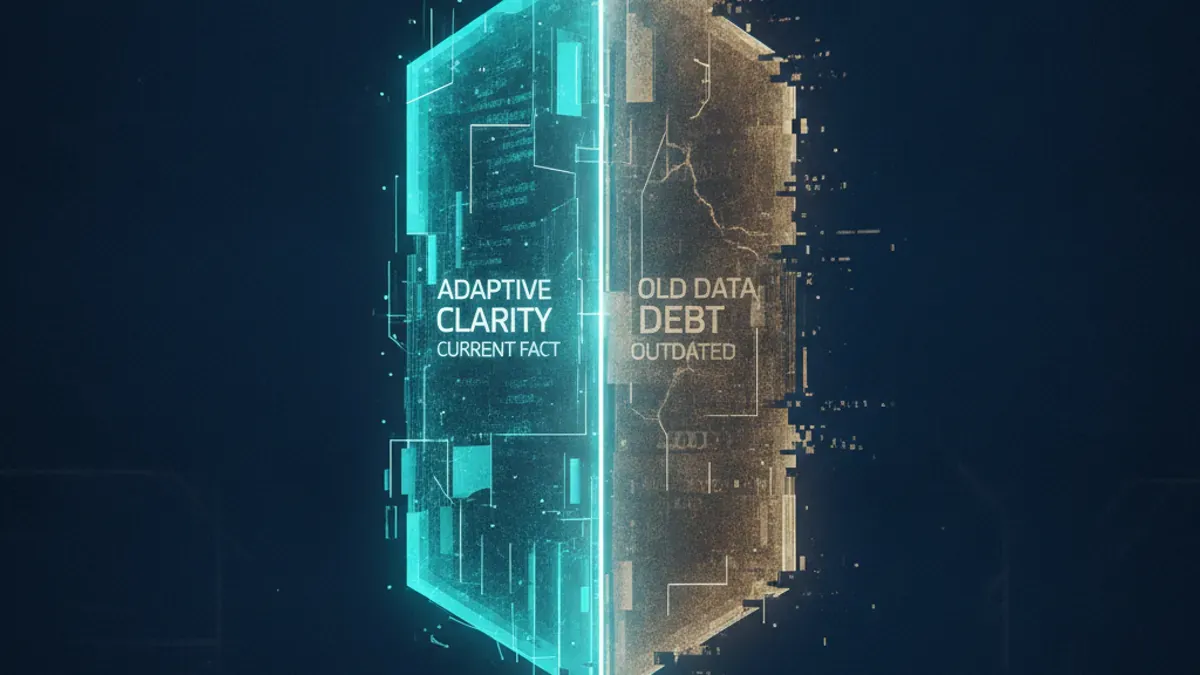
TL:DR: AI tools like ChatGPT and Copilot are dramatically boosting productivity, especially for junior and mid-level tasks in fields like software engineering. However, this efficiency comes with a hidden risk: bypassing the crucial learning phase where deep understanding and structural thinking are developed. We're seeing a potential "fault line" emerge – plenty of engineers who can execute tasks with AI assistance, but a growing scarcity of senior architects who can design systems, navigate ambiguity, and grasp the fundamental "why." The most valuable skills moving forward won't be speed or tool mastery, but the increasingly rare ability to structure thought, solve complex problems from first principles, and build logic from chaos.
Are We Trading Efficiency for Understanding?
If you've been talking to engineers lately, or frankly, anyone in a knowledge-based profession, you might have noticed a fascinating and slightly concerning trend bubbling up. On one hand, AI tools are empowering individuals to achieve unprecedented levels of productivity. On the other hand, there's a growing whisper – and sometimes a shout – about a widening gap at the higher echelons of expertise.
We're seeing AI rapidly automate many routine and mid-complexity tasks, potentially displacing roles focused on those areas. Simultaneously, finding truly high-level talent, like experienced system architects, is becoming more challenging than ever. At first glance, this looks like standard industry evolution – technology driving efficiency. But I believe we need to look deeper; we might be witnessing the formation of a new kind of capability "fault line."
Lessons from the Workshop Floor
This isn't entirely unprecedented. Think about traditional industries, like manufacturing. We saw situations where veteran craftspeople – the ones who not only operated the machinery but understood its inner workings, could repair it, and even design the workflow – retired. They were often replaced by younger workers skilled at running the newer, smarter machines, but lacking the deep mechanical intuition or the process design knowledge. The tools got smarter, but the fundamental understanding sometimes eroded.
Now, it seems, it's knowledge work's turn.
The Engineering Growth Path: Short-Circuited?
Tools like GitHub Copilot and ChatGPT can feel like magic, allowing engineers, especially those earlier in their careers, to generate code, debug issues, and implement features with remarkable speed. Tasks like basic CRUD (Create, Read, Update, Delete) operations can become almost like assembling pre-fabricated blocks. The efficiency gains are undeniable.
However, the traditional growth path for an engineer often involved a significant period of wrestling with fundamentals: starting with basic coding tasks, gradually mastering complexity, learning patterns and anti-patterns through trial and error, and eventually developing the ability to design robust, scalable systems. This middle phase, crucial for building foundational knowledge and architectural thinking, is the very ground AI is starting to cover.
The risk? We might inadvertently create a path that looks like this: Junior engineer leans heavily on AI → The crucial mid-level struggle for mastery is compressed or skipped → A shortage of engineers who can step up to high-level architecture and strategic thinking. That critical phase of "building the foundation" gets bypassed.
The Illusion of Progress: Teams Without Direction
This leads to a peculiar workplace phenomenon: a team might look fully staffed on paper, yet struggle to define a clear path forward, architect a cohesive solution, or effectively break down complex problems. Everyone can produce something, often quite quickly, but the ability to synthesize, strategize, and navigate ambiguity – the hallmarks of senior expertise – might be missing.
AI is making us more efficient, yes, but it might also be subtly stealing the time we used to spend practicing structural thinking. It allows anyone to generate output, leading some to mistake that output for deep capability.
The Future Belongs to the Structural Thinkers
Over time, organizations risk losing sight of a critical type of talent: individuals who can navigate ambiguity. These are the people who can step into a chaotic situation, discern the underlying logic (or lack thereof), figure out the right questions to ask, and understand how to decompose and reassemble systems effectively.
The most valuable professionals in the AI era won't necessarily be the fastest coders, the designers who produce the most mockups, or the writers who churn out the most copy. Instead, they will be:
- The engineers who understand why a certain piece of code is necessary and how it fits into the larger system.
- The designers who grasp the core principles of the brand and know why certain messaging works and other doesn't.
- The communicators who can distill complex ideas into simple, memorable concepts.
These abilities have always been valuable, but the pathway to developing them is becoming less obvious in an AI-assisted world. Companies that aren't actively identifying, nurturing, and valuing these skills now may face significant challenges later.
Finding the Hidden Architects
The problem is, these skills don't always shine on a standard performance dashboard. The person who quietly diagrams the convoluted logic from a messy meeting, or the presenter who uses fewer words to convey more meaning – these are often the individuals possessing that crucial structural thinking ability. They might not be the "fastest," but they enable the entire system, the entire team, to run better and longer.
They are becoming harder to find and more critical than ever.
The real "fault line" isn't a technology gap between generations; it's the compression of time available for cultivating deep, foundational thinking. The rarest and most valuable skill in the future won't be mastering the next AI tool, but retaining and strengthening that "old-school" ability to build logic from chaos.
Let's embrace AI's power, absolutely. But let's also be fiercely protective of the human capacity for deep thought, critical analysis, and true understanding. That's where sustainable innovation and lasting value will always reside.
Keep thinking, keep building.