6 min remaining
0%
数字转型

长安荔枝困境:一千年的供应链告诉我们关于企业技术膨胀的教训

了解长安荔枝外卖的古老故事如何为企业技术膨胀以及真正创新的限制必要性提供重要教训。

6 min read
Progress tracked
6 分钟阅读·
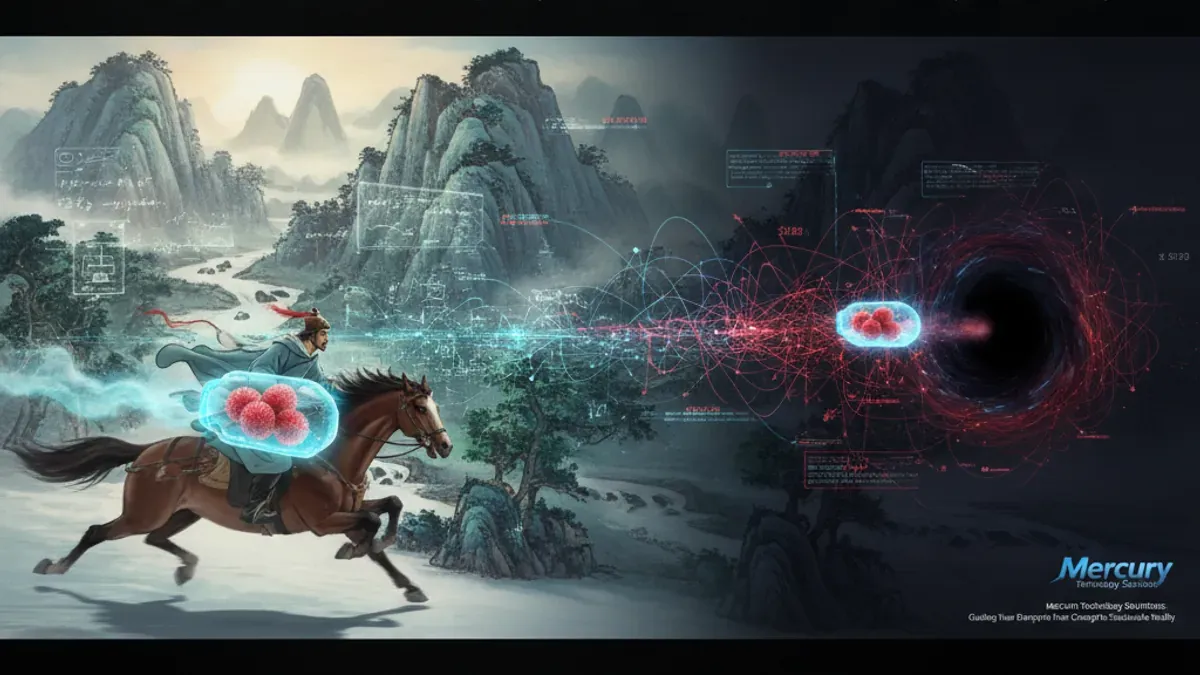
AI Generated Cover for: The Chang'an Lychee Dilemma: What a 1,000-Year-Old Supply Chain Teaches Us About Enterprise Tech Bloat

AI Generated Cover for: The Chang'an Lychee Dilemma: What a 1,000-Year-Old Supply Chain Teaches Us About Enterprise Tech Bloat

我最近在乘飞机时,正在观看一部精彩的历史小说的改编版,名为长安荔枝(长安的荔枝)。

我读过评论。我知道前提。但观看这个故事的展开引起了共鸣——不仅作为一个历史爱好者,而且作为一个每天醒着的时候都在思考的人数字化转型、业务运营和系统架构。

对于那些没有读过的人来说,情节简单而残酷。一名唐朝低级官员接到了一项不可能完成的任务:将新鲜的荔枝(一种三天之内就会腐烂的水果)从广东南部一路运送到首都长安,献给皇帝的宠妃杨贵妃。

这是一个关于中层经理如何利用工程思维将不可能变为可能的故事。但在表面之下,这是一场关于危险的大师班“无限预算”以及为什么市场约束实际上是企业最好的朋友。

这就是为什么这个古老的故事是现代企业技术的完美比喻。

(警告:前面有剧透。)

第一阶段:工程师的浪漫

故事的前半部分是工程师的绝对梦想。这是研发阶段。

我们的主角像现代供应链架构师一样应对这一物流噩梦。唐朝没有冷藏车,没有化学防腐剂,没有内燃机。所以他利用当代技术的绝对极限入侵了系统。

他想出了如何利用天然冰进行早期冷链物流。他利用天然香料进行保存。他设计了一个无情的高速马术中继系统来保证货物在二十四点七分的时间内移动。

他证明了这个概念。他解决了技术问题。

这是我们都喜欢的商业部分。白板会议。黑客马拉松。代码编译并且原型工作的那一刻。多巴胺的冲击“我们实际上可以做到这一点。”

第二阶段:阿波罗问题(可行性与成本)

但找到方法并不是故事的结局。一旦他拥有了如何,他撞到了一堵巨大的墙:成本。

从技术上讲,他的后勤框架是可行的。从经济上来说,这是一个黑洞。

这让我想起了阿波罗太空计划。 1969 年,人类证明了我们可以将人类送上月球。但现代的等效成本约为 3000 亿美元。这是一项巨大的成就,但巨大的代价意味着我们在接下来的三代人中独自离开了月球。

在商业中,没有成本限制的想法只是一个幻想。我们的主人公最初试图将业务外包给私营商人——本质上是私营企业。但他很快意识到,没有一家私营公司有足够的资本来承担巨大的风险和管理费用。市场经济学规定了一个简单的事实:如果一项业务的成本超过其产生的价值,企业就不会这样做。

可行性不等于生存能力。仅仅因为您可以构建某些东西并不意味着您应该这样做。或者你负担得起。

第三阶段:“无限”权力的灾难

为了完成这项工作,该官员向政府求助。起初,他只是想要一些补贴来帮助私营商人。但国家所做的事情与臃肿的实体所做的一样:它接管整个运作。

我们经常将政府或大型垄断公司视为拥有“无限”金钱和权力、能够实现任何目标的实体。但正如这个故事精美地说明的那样,政府实际上并不创造财富。他们提取它。

为了实现三天的荔枝配送,国家动用了绝对的权力。

需要马吗?征用他们。需要土地吗?抓住它。需要劳动力吗?征召农民。该项目成功实施,但代价是彻底耗尽和破坏了作为其燃料的当地社会。

这是市场经济与不受约束的权力之间区别的鲜明体现。私营企业寻找最高效、可持续的路线,因为它会受到市场对浪费的惩罚。一个拥有不受限制的权力和没有预算限制的实体并不关心效率。它只是强迫结果,将毁灭性的法案传递给其他人。

荔枝来了。当地经济遭到破坏。而这笔账单是由从未尝过水果的人买单的。

现代科技教训:为什么要受到限制加速数字化

那么这与我们科技行业有什么关系呢?

在水星,我们的使命是加速数字化我们赋能品牌改进商业运作并通过战略技术提高效率。

我每周都会看到一些传统企业的行为就像唐朝政府一样。他们发起大规模的“数字化转型“预算臃肿、空白支票的举措。因为他们没有被迫精简,所以他们过度设计、过度雇用并消耗资本,而没有提供真正的投资回报率。他们实现了目标,但内耗和资源流失让公司疲惫不堪。

真正的创新需要约束。它需要对效率的不懈关注。您需要准确了解每一美元、每一小时和每一资源的去向。

这就是为什么我们部署这样的系统Mercury 业务运营套件 (ERP)为我们的客户。它提供了有效管理关键业务功能的工具,具有协作任务管理、里程碑跟踪和资源分配功能,使项目保持在正轨并在预算之内。当您将销售、采购、人力资源和会计集成到一个模块中时,您就消除了黑洞企业废弃物。

约束不是创新的敌人。它是将真正的解决方案与昂贵的幻想区分开来的过滤器。

生活秘笈:别做杨贵妃

故事的最后,新鲜的荔枝到达了皇宫。还有杨贵妃呢?她几乎不在乎。她咬了一口,含糊一笑,然后继续前行。这项巨大的、消耗社会资源的努力的最终消费者完全不知道将这种果实放在她的盘子上所需的血、汗和建筑。

在生活和事业中,不要成为无知的消费者。

不要只要求软件功能、业务支柱或新服务而不询问:“基本成本是多少?谁来支付?”

自己建造东西。亲自参与代码、供应链或损益表。当您了解您所依赖的系统的真正机制和成本时,您的要求就会降低,并且更具战略性。

不要再依靠无限的预算来解决你的问题。相反,构建更精简、更智能的系统。

保持领先地位。

— 詹姆斯
Frequently Asked Questions

What is the Chang'an Lychee Dilemma?

A historical supply chain challenge from the Tang Dynasty where a low-level official was ordered to transport highly perishable lychees from Guangdong to Chang'an within three days—a feat that required early cold-chain logistics, relay riders, and natural preservation methods. The story illustrates the gap between engineering feasibility and economic sustainability.

What is the difference between feasibility and viability in business?

Feasibility asks whether something can technically be built or done. Viability asks whether it can be done at a cost that makes economic sense. A project can be perfectly feasible yet completely unviable if the resources required exceed the value generated.

Why are market constraints good for innovation?

Because they force efficiency, discipline, and creative problem-solving. When budgets are limited, teams must find the leanest path to value. Without constraints, organizations over-engineer, over-hire, and burn capital on features that do not deliver ROI—what the article calls the "unlimited budget trap."

What is the "unlimited budget" trap in enterprise tech?

The mistake of launching massive digital transformation initiatives with bloated, blank-check budgets that are not tied to measurable outcomes. Without cost discipline, these projects over-engineer solutions, drain organizational resources, and often achieve the technical goal while leaving the company financially and culturally exhausted.

How did the Tang Dynasty government solve the lychee delivery problem?

By using absolute state authority to requisition horses, seize land, and draft peasant labor. The project succeeded technically but destroyed the local economy that served as its fuel—demonstrating that unchecked power can force outcomes without caring about efficiency or sustainable cost.

What is the Apollo Problem?

The phenomenon where a technically feasible achievement—like the moon landing—costs so much that it cannot be sustained or repeated. The Apollo program cost roughly $300 billion in modern equivalents, and the expense was so prohibitive that humanity did not return for three generations.

Why do blank-check digital transformation projects fail?

Because they remove the market discipline that forces prioritization and efficiency. Organizations without resource constraints tend to over-engineer, add unnecessary complexity, hire excessively, and lose sight of the actual business value they are trying to create.

How can businesses build leaner, smarter systems?

By treating constraints as design features rather than obstacles. Set hard budgets, track every resource, integrate operations for transparency, and force every project to prove its ROI before scaling. Use tools like ERP systems to maintain visibility and discipline across all business functions.