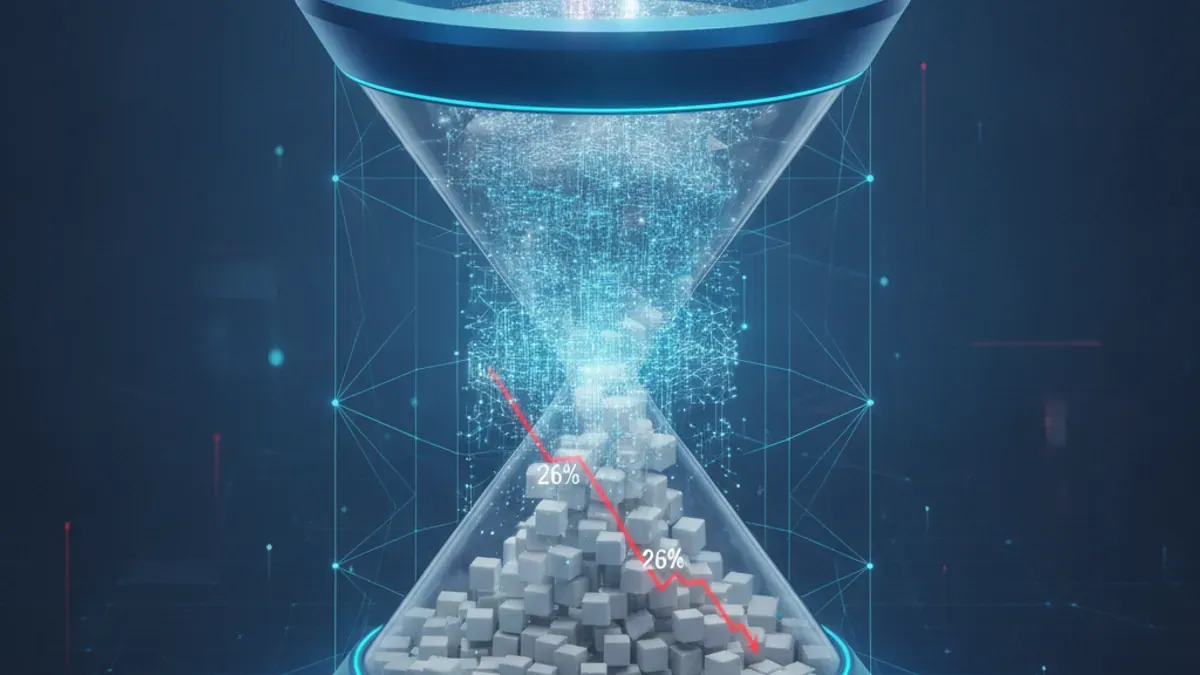
A fascinating question landed on my desk recently: Are we finally witnessing the rise of true "Public Interest Capitalism"?
At Mercury, we spend most of our time building software suites and digital infrastructure. But today, I want to step back and look at the macro operating system of the modern economy. Because something strange is happening in the world, and it reveals a bug in the logic we have all been sold.
The narrative goes like this: industrial upgrading is the only path to prosperity. Selling cheap shirts keeps you poor; building high-tech, high-margin products makes you rich.
But the real-world data tells a different story.
On one side, you have Pangdonglai—a traditional, low-tech grocery chain—distributing billions in profits directly to its frontline retail workers. On the other side, you have a globally dominant, high-tech battery manufacturer where the founder pockets billions in personal dividends, while grassroots engineers see a meager 150 RMB bump in their monthly pay.
Then look at the AI hardware boom. Last year, South Korean memory chip giant SK Hynix paid out an average bonus of roughly 630,000 RMB to its employees. With the explosion of generative AI, projections for those bonuses have skyrocketed into the millions. This was not an executive suite payout. All 33,000 employees—from assembly line workers to janitors—shared the wealth.
Why do identical profit margins yield such drastically different realities?
Let us debug the system.
The Feudal "Zero-Sum" Loop vs. The Tech "Positive-Sum" Engine
SK Hynix generated a staggering profit windfall from the AI boom—a figure roughly equal to the peak combined profits of China's top three real estate developers.
But look at the divergent outcomes.
Those real estate giants left behind a legacy of trillions in social debt, unfinished housing, unpaid suppliers, and a suffocated middle class. Why? Because legacy real estate is fundamentally a zero-sum game. It is a feudal economic model. It does not create new wealth; it extracts it through debt. The developer wins, the buyer loses, the supplier gets squeezed, and the government cleans up the mess.
True technological advancement is a positive-sum game. If training a Large Language Model used to take 100 days, and SK Hynix chips reduce that to 10 days, those 90 saved days represent massive, newly generated economic value. Time that can be spent building the next model, running the next experiment, creating the next breakthrough. When the company shares that profit, they are not extracting it from a helpless consumer. They are distributing the new wealth they engineered.
Because of this positive-sum distribution, SK Hynix essentially minted 30,000 millionaire households overnight.
You do not need government policies to "stimulate consumption" or "encourage marriage" when the middle class actually has money in their pockets.
Patching the Greed Algorithm: The Korean Playbook
Capitalism's default setting is to hoard. So how do you force a system to distribute?
You rewrite the rules.
The South Korean government deployed a brilliant, iron-fisted "legal API" to force wealth redistribution:
The "Three Generations to Zero" Inheritance Tax. Korea imposes a crippling 50% to 60% inheritance tax on corporate controllers, piercing through offshore trusts. When Samsung's Lee Jae-yong took over, he faced a historic tax bill of roughly 54.9 billion RMB, forcing the family to liquidate assets. You cannot infinitely hoard wealth for your dynasty.
The "Cancel-Style" Buyback. Unlike the typical corporate buyback—which just hands stock options back to executives—the government incentivized companies to cancel repurchased shares. By shrinking the total pool of shares, the value of the stock held by everyday retail investors automatically rises.
Global Taxation. You cannot simply flee to the Cayman Islands. If your business operates in Korea, you are taxed globally. Renounce your citizenship? You are hit with an exit tax on the theoretical market value of your shares immediately.
The government's message to the tycoons was simple: We will use national resources to build the infrastructure you need to win globally. But when you win, you will share the dividends with the public.
Upgrading Your Corporate OS with Digitality
Here is the hard truth for modern business leaders: upgrading your supply chain from making "sweatshop shirts" to "sweatshop batteries" is not an industrial upgrade if your management mindset is still stuck in the 1800s.
You cannot run a 21st-century tech company with a feudal, zero-sum mindset. If you view your employees as disposable tools and your retail investors as parasites, your company will eventually collapse under its own internal friction.
At Mercury Technology Solutions, this is why we build the digital infrastructure we do. You need transparent, scalable systems to manage a modern, equitable enterprise.
We deploy the Mercury Business Operation Suite (ERP) to integrate financial activities, human resources, and project management into a single module for efficient management and transparent data sharing.
We integrate Mercury Muses AI not to replace your workforce, but to automate repetitive tasks, enhancing productivity and freeing up teams for strategic initiatives.
When you eliminate operational bottlenecks and create true digital transparency, you stop managing "resources" and start collaborating with partners.
If we want true public interest capitalism, we have to stop trying to extract the last drop of water from a shrinking pond. Build better systems, create new value, and share the dividends.
Stay ahead of the curve.
— James