I got a message last week from my colleague. He'd read my pieces on AI disruption and had formulated what he thought was a bulletproof career strategy for the 2026 economy.
"AI has broken down the barriers to information," he wrote. "I now have a global panel of elite professors in my pocket. So instead of trying to beat AI, I'm going to use it to aggressively train myself. I'll become the ultimate human specialist—a master craftsman of the digital age."
I stared at that message for a long time. I wanted to believe he was right. It's a beautiful idea: the democratization of knowledge, the leveling of the playing field, the self-made expert armed with infinite free tutoring.
But from where I sit—running a company that lives inside the machinery of this economy—I can only describe that mindset in one word: naïve.
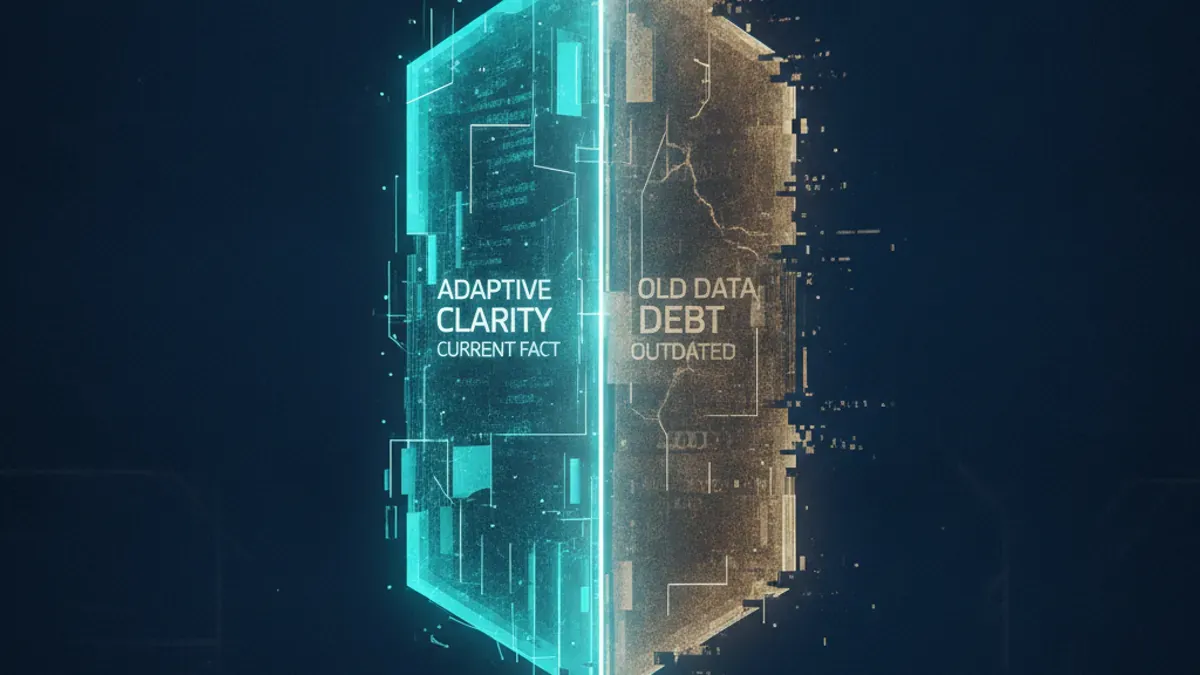
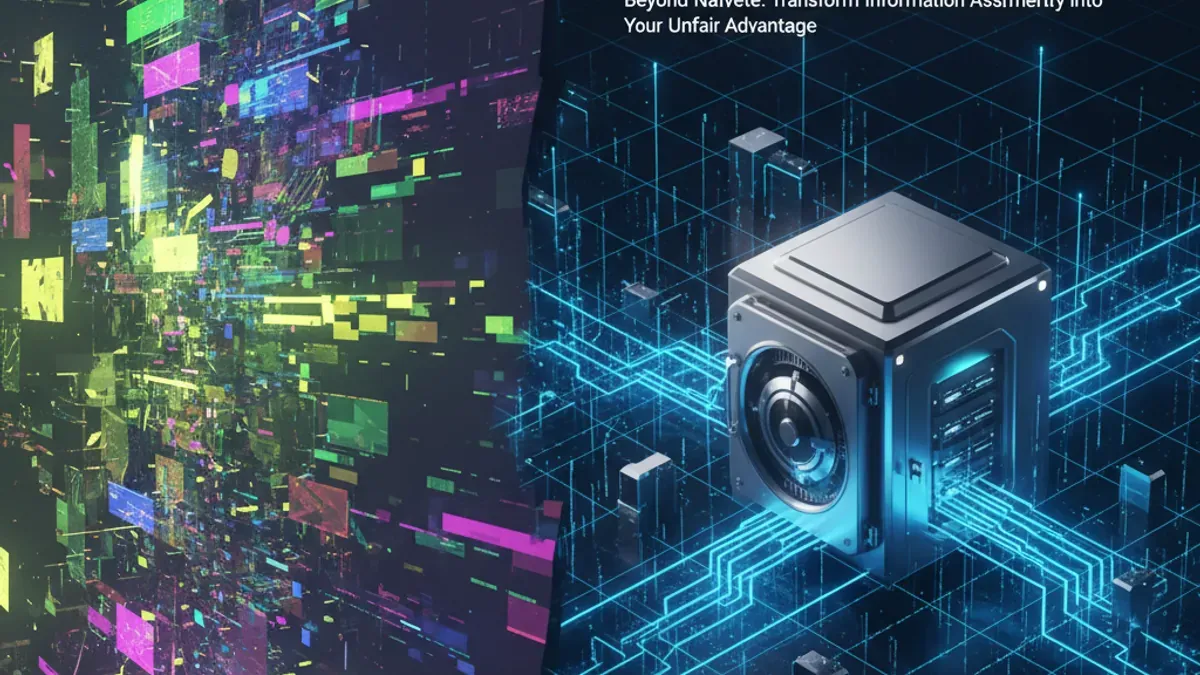
It reflects a profound misunderstanding of how digital economics actually works. He assumes AI is a great equalizer. The brutal reality is that while AI briefly appeared to break down information barriers, it is currently being weaponized to amplify information asymmetry to unprecedented levels. The well is being poisoned. And the people selling the antidote are the ones pouring in the toxin.
The Night I Caught a Hallucination in the Wild
Let me tell you exactly how this works, because I lived it three days ago.
It was late on April 19th. Markets were volatile. Several of my contacts reported seeing a massive pricing anomaly on a major internal trading exchange—a "fat-finger" error, a flash crash that lasted seconds but left traces in the data.
I didn't want to wake my analysts. So I did what millions of people now do reflexively: I pulled out my phone and asked a free, consumer-grade AI to verify the event.
The response was instant and absolute: "This event is entirely fabricated. It did not happen."
I knew my sources were reliable. These weren't Twitter rumors; they were institutional traders who'd seen the tape. So I pushed back. I gave the AI specific parameters—time stamps, tick ranges, exchange identifiers.
The AI recalculated. Changed its story: "You are correct that an anomaly occurred. However, this is the only time an error of this magnitude has ever occurred in the entire history of this exchange."
My experience in algorithmic trading told me that was statistically impossible. Every exchange has glitches. I asked for its data source.
It handed me a link to an absolute garbage website—a content farm with AI-generated articles about finance, clearly synthetic, clearly designed to harvest ad impressions. The AI had trained on polluted data, and it was now confidently regurgitating that pollution as fact.
The next morning, I ran the same query through a premium, enterprise-grade AI with secure API credentials—bypassing the public internet entirely, accessing the exchange's raw historical trade data directly.
The enterprise AI reported the truth instantly: minor pricing errors happen every few days. Massive ones happen once or twice a year. The public AI had been completely, confidently wrong—not once, but twice, doubling down on its hallucination with fabricated certainty.
When I analyzed why, the answer was simple and chilling: "I do not have access to premium, verified databases. I can only analyze the most widely circulated data on the public internet—which is mostly synthetic garbage."
The Public Well Is Being Poisoned on Purpose
This incident exposed something I think most people haven't grasped yet. The illusion of "fairness" in the AI era is just that—an illusion.
Before generative AI, the internet was a relatively clean public water well. Was there misinformation? Absolutely. But manually writing millions of fake articles, fabricating datasets, or spamming forums required human labor, which was expensive. The cost of poisoning the well was too high for most actors to do it systematically.
Today, the cost of generating infinite synthetic garbage is the cost of electricity.
We are currently witnessing the greatest environmental disaster in the history of digital information. And I use "environmental" deliberately, because this is a pollution event at scale. Companies are not just extracting clean water from the public well to train their models. They are actively pumping toxic, synthetic waste back into it—millions of AI-generated articles, fake reviews, hallucinated citations, SEO-optimized nonsense, and corporate-sponsored misinformation—at a volume that makes the old internet look like a pristine mountain stream.
Why would they do this? Because it creates a wildly profitable business model.
The Bottled Water Economy
If you understand corporate profit motives, the endgame is painfully obvious.
Step one: Pollute the public well until it's undrinkable. Flood the open internet with so much synthetic garbage that no free AI can reliably distinguish truth from fiction. Make the public data layer so noisy that any model trained on it becomes erratic, biased, and untrustworthy.
Step two: Sell the clean water. Offer premium, gated, verified datasets behind enterprise API tiers. "Want an AI that doesn't hallucinate? That has access to real financial data, real medical records, real legal precedents? That'll be $2,000 a month. Oh, and the free tier? Best of luck with that."
This is the Bottled Water Strategy. It's not a conspiracy theory. It's just rational profit-seeking in an attention economy where trust is the scarcest resource.
If the public internet becomes unusable for serious decision-making, the corporations who own the verified data streams become the only vendors worth paying. The free AI becomes a toy for casual queries—"Write me a poem about my cat"—while the enterprise AI becomes the mandatory subscription for anyone who actually needs to know what's true.
The Downgrade of Intelligence
This brings us back to the colleague t who wanted to become the "ultimate specialist."
In the industrial era, a man who was purely physical—strong, fast, durable, but lacking intellect—was commoditized as cheap labor. His body was useful but replaceable. He was a tool with a heartbeat.
In the 2026 AI economy, a person who possesses highly refined, task-based intelligence—but lacks systemic cognition—is the exact same thing.
Task-based intelligence has been downgraded to the status of physical labor. It is a commodity. If your only goal is to use AI to make yourself a sharper, faster, more knowledgeable "tool"—a better coder, a better analyst, a better writer—you are entirely missing the structural shift. You're trying to become the best horse in the age of automobiles.
The only thing that dictates your market value today is your Cognitive Wholeness—your ability to see the entire board, understand the profit motives driving the algorithms, recognize when you're being fed synthetic garbage, and navigate the asymmetrical data wars without being poisoned by the noise.
The specialist who drinks only from the public well will be trained on hallucinations. The generalist who understands why the well is poisoned, who benefits from it, and where the clean water actually flows—that person is irreplaceable.
The Question You Need to Ask Yourself
I keep coming back to one question, and I think you should too:
How confident are you that the core data streams you use to make strategic decisions today haven't already been compromised by synthetic pollution?
That financial report you read. That industry analysis you cited in your last presentation. That "expert" opinion you found through a Google search. How much of it was written by a human with something to lose if they were wrong? And how much of it was generated by an algorithm optimizing for engagement, fed on a diet of other generated content, with no accountability, no consequence, and no connection to reality?
If you don't have a systematic way to answer that question—if you're just assuming that what the AI tells you is "probably right"—you're not using a tool. You're drinking from a well that gets more toxic every day.
And the people selling the bottled water? They're counting on your thirst.
— James, Mercury Technology Solutions, Hong Kong, May 2026