TL;DR: Academics and international experts are currently panicking, claiming the US strikes on Iran have "destroyed the international order." This exposes a dangerous misunderstanding of both geopolitics and basic systems management. Many Westerners operate on the false assumption that "peace" is the natural default state of the world. It is not. For the Iranian regime, war is not a bug; it is a core feature hardcoded into their constitution. Waiting for a "perfect diplomatic solution" while a hostile system builds a nuclear payload isn't strategy—it is systemic paralysis.
James here, CEO of Mercury Technology Solutions. Tokyo, Japan - March 5, 2026
Whenever a major geopolitical disruption happens, the media gets flooded with armchair academics and international relations experts mourning the loss of "international norms." They argue that the US strikes were too aggressive, that we needed a better plan, and that we should have just given the Iranian regime more time to reform.
As someone who runs complex engineering projects and enterprise systems, I listen to these experts and immediately recognize a classic management failure: The refusal to take responsibility for hard execution. Here is the unvarnished reality of what is actually happening, stripped of the academic jargon and "useful idiot" tourist narratives.
1. Iran's Base Code: War is a Feature, Not a Bug
Many Westerners—especially tourists who visited Tehran, enjoyed the hospitality, and returned with glowing reviews—suffer from a severe blind spot. They assume that because the middle-class citizens they met want peace, the regime wants peace.
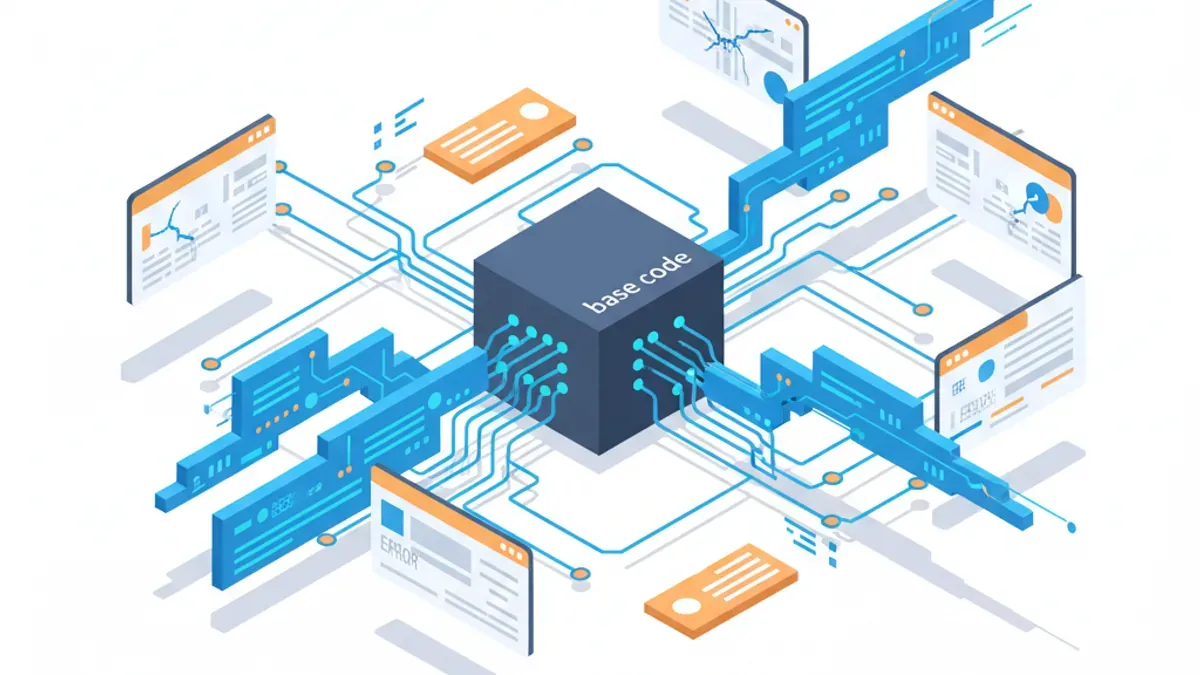
If you want to understand a system, you don't look at the UI (the tourists); you look at the source code (the Constitution).
The Iranian Constitution does not mandate peaceful coexistence. It explicitly mandates the export of the Islamic Revolution and the support of global struggles. Since its founding, the regime has required external enemies to justify its authoritarian power and to feed the Islamic Revolutionary Guard Corps (IRGC), which consumes roughly 40% of the nation's economy.
- First, it was the Soviet Union and Saddam's Iraq.
- When those collapsed, the regime needed a new enemy to justify its existence: Israel.
The annihilation of Israel is not just political rhetoric; it is a systemic objective. Supreme Leader Khamenei even coined the term "Heroic Flexibility"—the concept that it is perfectly acceptable to deceive infidels and the West to buy time for the ultimate mission.
Those who pleaded to "give Iran time to democratize" completely misread the software. Giving them time wouldn't lead to democracy; it would lead to a regional nuclear war.
2. The "Out of Memory" Error of International Experts
So, why do so many experts fiercely oppose decisive, preemptive action? Because they have never managed a real-world project where failure has catastrophic consequences.
If you have ever managed a massive enterprise project (like building a semiconductor fab), you know that execution requires ruthless prioritization. You have limited capital, limited manpower, and strict dependencies. You cannot install the delicate manufacturing equipment before you pour the concrete foundation.
The academics demanding a "perfect, peaceful, all-encompassing diplomatic solution" are committing a fatal systems error. They are trying to execute too many conflicting processes at once without the necessary resources.
What happens to a computer when you try to open 1,000 heavy web browser tabs at the same time with limited RAM? The system freezes. And when a system freezes, you only have one option: A hard reboot. That is exactly what the recent kinetic strikes were—a violent, necessary hard reboot of a system that was stalling out and building toward a nuclear catastrophe.
3. The Paralysis of the "Perfect Plan"
It is incredibly easy to sit in a university office and critique the execution of a project. It is much harder to be the one who has to press the button.
These experts claim the strikes "ruined the international order," largely because many of them simply despise Trump. But ask them this: "If we did nothing, what was your actionable plan for the day Iran finished its 8th nuclear warhead and decided to execute its constitutional mandate against Israel?"
They have no answer. They don't understand cold-war deterrence, and they don't have a viable alternative.
In management, taking no action is still a decision—and often the most destructive one. Pointing out the flaws in a decisive action is easy. Taking responsibility for the horrific consequences of inaction is hard. The experts complaining today are simply dodging responsibility.
Conclusion: Dealing with Reality
You cannot negotiate a software patch with a virus that is explicitly programmed to delete your hard drive. You have to quarantine it or wipe it.
The Iranian regime's ultimate goal was never peace; it was the total destruction of its enemies, justified by a timeline of generational holy war. The US strikes were brutal, yes. But they stopped the clock on a regional nuclear exchange.
When analyzing global conflicts or business crises, ignore the people demanding a perfect, painless solution. Listen to the people who are willing to make the hard, ugly choices to keep the core system from collapsing entirely.
Mercury Technology Solutions: Accelerate Digitality.
Appendix: Crisis Prioritization Framework we use at Mercury Technology Solutions.
As leaders, our natural instinct is to fix things. We pour time, money, and engineering hours into failing projects or toxic vendor relationships because we believe a "perfect" diplomatic or technical solution is just one more meeting away.
But in systems architecture—and in business—you cannot patch a rotten foundation. Sometimes, you just have to pull the plug. Here is how you identify when to stop analyzing and when to execute a hard reboot.
The Crisis Prioritization Framework: When to Execute a "Hard Reboot"
Phase 1: The "Base Code" Audit (Identify the Rot)
Before you try to save a failing project or relationship, you must determine if the problem is a surface-level bug or a fundamental flaw in the base code. Ask your leadership team these three binary questions:
- Is the core premise still valid? (Did the market shift? Did the vendor lie about their capabilities?)
- Are we fixing the product, or are we fixing the relationship? (If you are spending more time managing the vendor's ego or incompetence than building the actual product, the base code is toxic).
- If we were starting this exact project today, knowing what we know now, would we fund it? Action: If the answer to #3 is "No," you immediately move to Phase 3.
Phase 2: Calculate the "RAM" Drain (Opportunity Cost)
A failing project doesn't just cost money; it hogs your organization's "RAM" (mental bandwidth, leadership attention, and engineering morale), causing your healthy projects to freeze or slow down.
- Quantify the Hidden Costs: Map out exactly how many hours your top performers are spending in crisis meetings trying to resuscitate this dead project.
- The A-Player Drain: Your best people want to build winning systems, not babysit losing ones. A toxic vendor or a doomed project will cause your top talent to quit. You are not just losing money; you are losing your future architecture.
Phase 3: Set the "Fatal Flaw" Trigger (The Kill Switch)
Analysis paralysis happens when leaders don't define their breaking point in advance. You need to establish a strict, emotionless trigger for the Hard Reboot.
- Define the Red Line: Give the failing project or vendor one final, non-negotiable metric. (e.g., "If the API does not hit a 99.9% uptime by Friday at 5 PM, we terminate the contract.")
- Kill the "Sunk Cost" Fallacy: It does not matter if you have spent $500,000 and 6 months on this initiative. That money is gone. The only question that matters is whether you are going to burn another $50,000 next month.
Phase 4: Execute the Hard Reboot
When the trigger is hit, you execute the reboot cleanly, legally, and without emotion.
- Do Not Negotiate: A hard reboot is not a warning; it is a termination. Do not let the vendor or the project manager promise that "the next patch will fix everything."
- Contain the Blast Radius: Have your fallback architecture ready. If you are firing a vendor, have your AI agents or a temporary internal team ready to bridge the operational gap immediately.
- Communicate the "Why": Tell your team exactly why you killed it. "We terminated this project because it violated our core quality standards and was draining resources from our winning products. We are taking the loss and moving forward." Your team will respect the decisive action.
Mercury Technology Solutions: Accelerate Digitality.