TL;DR: Readers recently asked me who they should believe regarding the future of work: Duan Yongping (who says AI will destroy all stationary jobs) or Lei Jun (who says AI will allow us to work two days a week). The truth is, they are both right—they are just talking about two completely different classes of humans. To survive the AI era, you must understand how AI is actually trained. You are no longer an employee; you are a sensor feeding an algorithm. Your only defense mechanism is to make your daily workflow so multi-dimensional and complex that replacing you requires too much computational energy.
James here, CEO of Mercury Technology Solutions. Hong Kong - March 13, 2026
A few days ago, a reader left a fascinating comment on my blog: "James, Duan Yongping (founder of BBK Electronics) said that anyone who sits or stands still at work will be replaced by AI. That sounds terrifying. But Lei Jun (founder of Xiaomi) said AI will soon allow us to work just two days a week for three hours a day. Who should I believe?"
The answer is both. Duan Yongping is describing the fate of the Replaceable Class. Lei Jun is describing the future of the Architect Class. Which one you belong to depends entirely on a concept I call Computational Energy Arbitrage.
To understand this, you first need to understand how AI is actually built.
1. You Are No Longer an Employee. You Are a Sensor.
Twenty years ago, when I was in university, I used to write "bots" (macros) for video game players who were grinding for virtual gold. To write a bot, I had to sit behind the player, watch them click, translate their specific actions into code, and then let the computer execute it.
That was the old era of programming: Human Observation → Human Translation → Machine Execution.
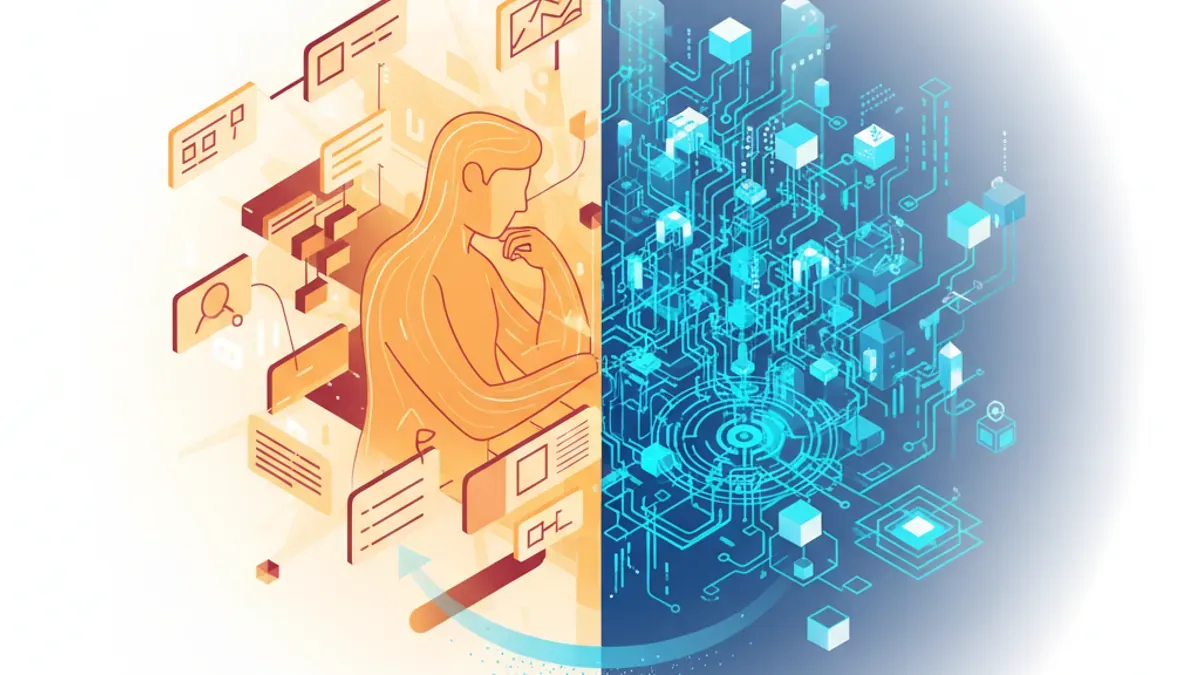
Look at how Tesla and Xiaomi train autonomous driving today. They do not hire programmers to write "If/Then" rules for every possible traffic light. Instead, they put millions of cars on the road driven by human beings. While you drive, the AI runs in the background, simulating what it would do. Every time you make a better decision than the AI (like swerving to avoid a pothole), the AI records your action, sends the data back to the server, and updates its neural network.
The new era of programming is: Human Action → Machine Observation → Machine Execution.
If you work in a modern corporate office, you are doing the exact same thing. Every time you use an AI tool to draft an email, sort a bug list, or schedule a meeting, you are acting as a human sensor. You are teaching the AI how you do your job. Eventually, it will learn enough to do it without you.
2. The Rule of "Exhaustion" (Why Duan Yongping is Right)
Duan Yongping said that if you sit still (like a coder or a copywriter) or stand still (like a factory assembly worker), you will be replaced. Why?
Because your job can be exhaustively calculated (窮舉).
If your job consists of looking at a 2D screen and pressing a finite combination of keys, the variables are limited. An AI can simply record every possible permutation of your daily tasks, calculate the optimal path, and replace you. The computational energy required to simulate a customer service rep or a junior data analyst is incredibly low.
If your job can be captured entirely by a webcam and a keyboard logger, your countdown has already started.
3. The Computational Energy Moat (Why Lei Jun is Right)
Lei Jun’s utopian vision of the 2-day workweek applies to people whose jobs cannot be exhaustively calculated.
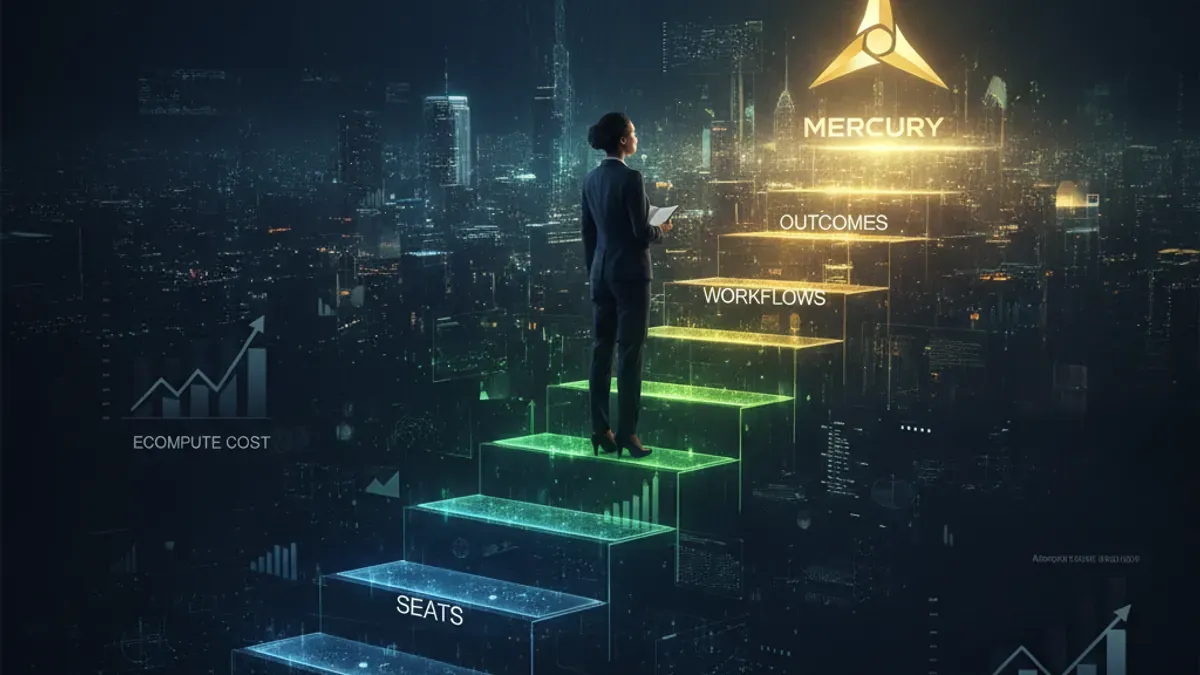
In the AI era, human value is no longer determined by how many degrees you have or how fast you type. Your value is determined by how much GPU compute (energy) it would cost an AI to replace you.
Computing power is currently the most expensive commodity on earth. Processing complex, multi-dimensional, physical, and psychological variables causes an exponential spike in energy consumption.
- Low Energy Cost to Replace: A copywriter writing an ad. (AI does this for fractions of a cent).
- Massive Energy Cost to Replace: A project manager who has to physically walk onto a construction site, negotiate a sudden price dispute with an angry subcontractor, adjust the architectural blueprint on the fly, and calm down the nervous client.
For an AI to replace that project manager, it would need a robotic body capable of navigating a chaotic 3D environment, the localized processing power to instantly adapt a CAD file, and the Artificial General Intelligence (AGI) required to execute complex psychological negotiations. The energy and hardware cost to run that AI is currently millions of dollars.
It is infinitely cheaper just to hire you.
Conclusion: Become Too Expensive to Compute
Historical definitions of "prestige" are blinding us. Twenty years ago, a software engineer sitting in an air-conditioned office was the peak of societal success, while a plumber was looked down upon. If you take that 2005 software engineer and drop him into ancient Rome, he is useless—he can't farm, he can't fight, and he can't build.
Today, we are experiencing a similar paradigm shift. The prestige of the "sit-still white-collar worker" is collapsing because their energy replacement cost is near zero.
If you want to survive, you must increase your computational replacement cost. You must combine intellectual strategy with chaotic physical execution and deep human psychology. If you can do that, you won't just survive the AI era—you'll only have to work two days a week.
Mercury Technology Solutions: Accelerate Digitality.