The Scumbag Playbook: Why AI Rewards the Ruthless, Not the Righteous
TL;DR: AI is not the internet. The internet had zero marginal cost; AI has escalating marginal cost. It's an energy industry, not a media industry. The winners won't be the ones who "ethically integrate" AI into existing workflows. They'll be the ones who treat digital workers as disposable cannon fodder—running 20 experiments in parallel, failing fast, and letting the survivors pay for the casualties. The geopolitical math is brutal: silicon is draining carbon, and the window for small players to exploit this asymmetry is open—but it won't stay open forever. Your choice is simple: be the scumbag, or be the scumbagged.
James here, CEO of Mercury Technology Solutions. From my office in Tokyo — July 2026
Everyone wants to be the next internet pioneer. The narrative is seductive: AI is the new internet, get in early, build something light, scale to billions, retire before 40.
That narrative is wrong. AI and the internet are fundamentally different economic animals. Understanding the difference isn't academic—it determines whether you survive the next decade.
The Internet Was a Movie. AI Is a Heater.
The internet's magic was zero marginal cost. Build a website once, serve a billion users. Write software once, sell a million copies. The cost of the next unit approached zero. This is why Jack Ma could tell his team in 1999: "Profitability doesn't matter. Burn money to capture territory." Because once you owned the territory, the cost of serving it was negligible. You were printing money with someone else's electricity.
AI doesn't work like that.
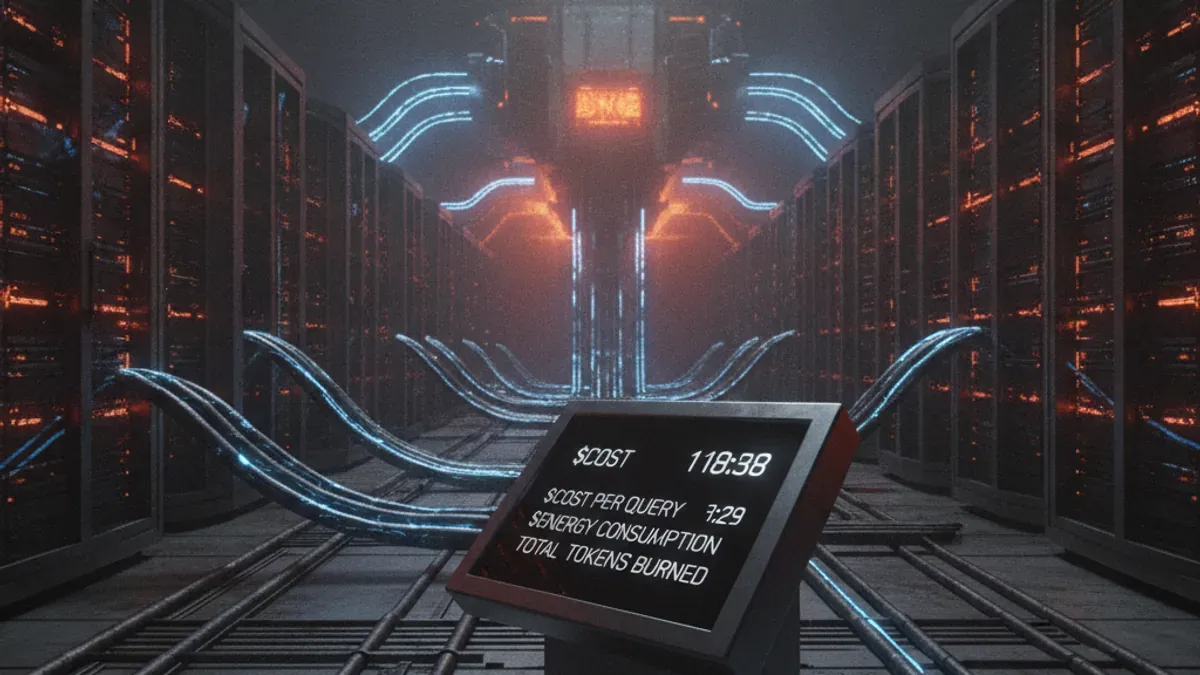
Every query burns tokens. Every complex task burns more. Every multimodal generation burns exponentially more. Those tokens map to data centers, NVIDIA GPUs, rare earth metals, storage, electricity, cooling. The marginal cost of AI is not zero. It's not even flat. It's escalating.
Ask AI one question: burn one unit of energy. Ask AI a hundred questions: burn a hundred units. Ask AI to process a novel, generate a screenplay, and render video from every scene: you'll burn through your monthly budget before lunch. This is why every major tech company has shifted from "use all the AI you want" to "here's your token cap, good luck." The buffet is closed. À la carte is here, and the prices are rising.
The internet was a distribution revolution—making information and software cheap to spread. AI is an energy revolution—replacing human cognition with silicon cognition, but at an energy cost that scales with usage. Think of it like heating: one household uses X energy. A thousand households use 1,000X. There's no network effect that makes the 1,000th unit cheaper than the first.
This means the business models that worked for the internet will not work for AI. You cannot "burn money to capture territory" because the territory itself consumes resources proportional to its use. You cannot build a "light app" and scale infinitely because every user interaction has a direct energy cost. The economics are closer to petroleum than to Pinterest.
The Scumbag Principle: Why AI Loves the Ruthless
So if AI isn't about building one beautiful thing and scaling it, what is it about?
It's about reducing the cost of failure.
Traditional entrepreneurship has three costs: financial, temporal, and opportunity. You spend money to build a team. You spend months or years testing an idea. And while you're doing that, you're not doing anything else. Fan Jin spent 50 years studying for the imperial exam. If he failed, those 50 years were gone. That's opportunity cost at its most brutal.
AI doesn't compress the time it takes to test an idea—some things still have biological or physical limits. But it crushes the financial cost of testing. What used to require a team of 10 and a year of runway can now be attempted with digital workers at a fraction of the cost. The digital employee doesn't need office space, doesn't need health insurance, doesn't argue about equity, and doesn't quit because your "culture" isn't "aligned" enough.
Here's what this means in practice: if the cost of trying drops by 95%, the rational move is to try 20 times instead of once.
Venture capitalists understood this decades ago. They don't bet on one company. They bet on 30. They know 25 will die. They don't care. The 5 survivors pay for the 25 casualties and then some. This is portfolio theory, and for the first time in history, individual entrepreneurs can operate with portfolio logic instead of single-bet desperation.
I call this the Scumbag Playbook—because the strategy is identical to how a scumbag operates in dating. Don't commit. Don't invest emotionally. Play the numbers. Message 50 people, go on 20 first dates, see what sticks. The ones that don't? Zero cost. The one that does? Jackpot.
This is how you should treat AI.
Your digital workers are not your "team." They're not your "colleagues." They're not people. They're financial line items. You can spin up 20 experiments, staff each with a digital crew, and if 19 fail, you delete them. No severance. No morale damage. No Glassdoor reviews. The 20th experiment that works pays for the other 19 and funds the next 40.
In the game Shogun: Total War, there are two ways to play. You can upgrade your armies meticulously—better armor, better weapons, careful tactical positioning. Or you can play the "infinite zerg" strategy: spam cheap, disposable units, overwhelm the map, accept massive losses as long as you're capturing territory faster than you're burning resources. My roommate in university played the zerg. He unified the map in half the time I did.
That is the AI era. The "ethical" constraints that applied to human teams—don't overwork people, don't fire them capriciously, don't treat them as disposable—don't apply to digital workers. They're not sentient. They're not suffering. They're a cost center you can scale up or down with a API call. The companies that internalize this fastest will win. The ones that keep treating AI like a "collaborative partner" with "rights" and "dignity" will lose to the ones treating it like compute cycles with a chat interface.
This isn't about being cruel. It's about recognizing that the unit economics of AI favor volume over perfection. If your cost per experiment drops below your expected value per experiment, you should be running as many experiments as your cognition can manage. Not one. Not three. Twenty. Fifty. However many you can orchestrate without losing strategic coherence.
The Energy Industry Trap
But here's the catch—one that most AI cheerleaders miss entirely.
If AI is an energy industry, not a media industry, then the long-term economics look very different. An energy industry requires continuous investment. You don't "build the power plant and coast." You maintain, you upgrade, you expand capacity. And if demand grows faster than efficiency gains, prices rise.
We're already seeing this. The cost of training frontier models has increased 1,000x in three years. The cost of inference is falling, but the cost of the best inference is rising. Companies are spending billions on data centers. The resource competition for GPUs, electricity, and rare earth minerals is intensifying. This isn't a software business. It's a heavy industry with commodity inputs.
And here's the geopolitical math that should terrify you: silicon is draining carbon.
Every dollar invested in AI infrastructure is a dollar not invested in traditional businesses. Every job displaced by AI is a consumer with less income to spend on AI-powered products. Every efficiency gain in corporate operations is a wage that doesn't become household spending. The silicon economy is extracting value from the carbon economy, but the carbon economy is still the one paying the bills.
Think about it. AI companies sell to other companies. Those companies sell to consumers. If consumers lose jobs to AI, who buys the products? If Apple raises prices because memory costs are spiking, but wages are stagnating because AI is displacing workers, what happens to demand? The circular flow of the economy breaks when the labor that generates income is replaced by capital that generates output—but no income.
This is why I say the window is open but finite. Right now, small players can exploit the asymmetry: AI is cheaper than human labor for many tasks. You can replace 10 human workers with digital agents and pocket the difference. This is the predation window—the moment when silicon is cheaper than carbon, before the systemic feedback loops kick in.
But those feedback loops are coming. If AI displaces too many jobs too fast, consumer demand collapses. If consumer demand collapses, the businesses using AI lose their customers. If businesses lose customers, they can't afford AI. The system chokes on its own efficiency. It's not a bug. It's a design feature of an energy-dependent technology replacing income-generating labor.
The internet created new jobs while it destroyed old ones. Net positive. AI, in its current form, destroys jobs faster than it creates them, and the jobs it creates are heavily concentrated in the silicon infrastructure layer—data centers, chip design, energy production. The rest of the economy becomes a cost to be minimized, not a market to be served.
The Geopolitical Squeeze
And this isn't just an internal market problem. It's an international one.
When one country dominates AI infrastructure, it can extract value from every other country that uses its services. This is the modern equivalent of controlling the oil supply. And just as oil dependency created geopolitical friction, AI dependency will create the same. If your economy is running on another country's silicon, you're paying tribute. Every token is a tiny tax. Every model call is a wealth transfer.
Countries that can't afford to build their own AI infrastructure will resist. They'll impose tariffs, demand currency appreciation, restrict data flows. The US is already seeing this. The EU is already seeing this. The developing world is watching its potential service-economy jobs evaporate into American data centers, and they won't sit idle.
The 2016 election was fueled by anger at Mexican immigrants "taking jobs." AI is taking jobs at 10x the speed and 100x the scale. The political backlash is coming. It's not a question of if. It's a question of when and how violent.
The scumbag entrepreneur operates in the window before the backlash arrives. Use AI to replace labor-intensive operations now. Extract the margin while it's there. Build your war chest before the regulatory, social, and economic constraints tighten. Because they will tighten. The only question is whether you're rich enough to survive the tightening.
Your Move
So here's the practical framework. Stop thinking like a 1999 internet entrepreneur. Start thinking like an energy trader with a zerg army.
1. Parallelize your bets. If you have one idea, you have a problem. If you have 20 ideas and the capital to test them all simultaneously, you have a portfolio. AI makes the second option viable for individuals.
2. Treat digital workers as COGS, not team. Cost of goods sold. Line item. Disposable. If an experiment fails, you don't "lay off" your AI agents. You just... stop calling them. The emotional overhead of human management is gone. Use that cognitive bandwidth for more bets.
3. Capture the predation window. Right now, AI is cheaper than humans for many cognitive tasks. This won't last forever—either because AI gets regulated, or because the economic feedback loops make human labor relatively cheaper again, or because AI itself becomes more expensive as demand outstrips energy supply. Exploit the asymmetry while it exists.
4. Don't build for infinite scale. Build for finite, high-margin extraction. AI businesses aren't social networks. They don't get cheaper per user. They get more expensive. Your business model needs to reflect this. Charge for value delivered, not eyeballs captured.
5. Diversify your revenue streams. If your entire income depends on AI-dependent services, you're exposed to the carbon-silicon squeeze. Maintain some traditional revenue streams, some human-dependent services, some physical-world operations. The hybrid survives the purebred.
The ultimate insight? AI is not a tool for building a better world. It's a tool for extracting value from the existing world before it changes. The internet connected people and created new possibilities. AI replaces people and concentrates value. The winners will be the ones who see this clearly, act ruthlessly, and exit before the systemic contradictions resolve.
The window is open. The window is closing. Whether you're the predator or the prey depends on whether you're willing to play the scumbag.
Mercury Technology Solutions: Accelerate Digitality.
Next Blog Post: The Carbon-Silicon Squeeze: How to Build a Hybrid Business That Survives the AI Backlash
Published by Mercury Technology Solutions | mtsoln.com | Systemic Growth Architecture