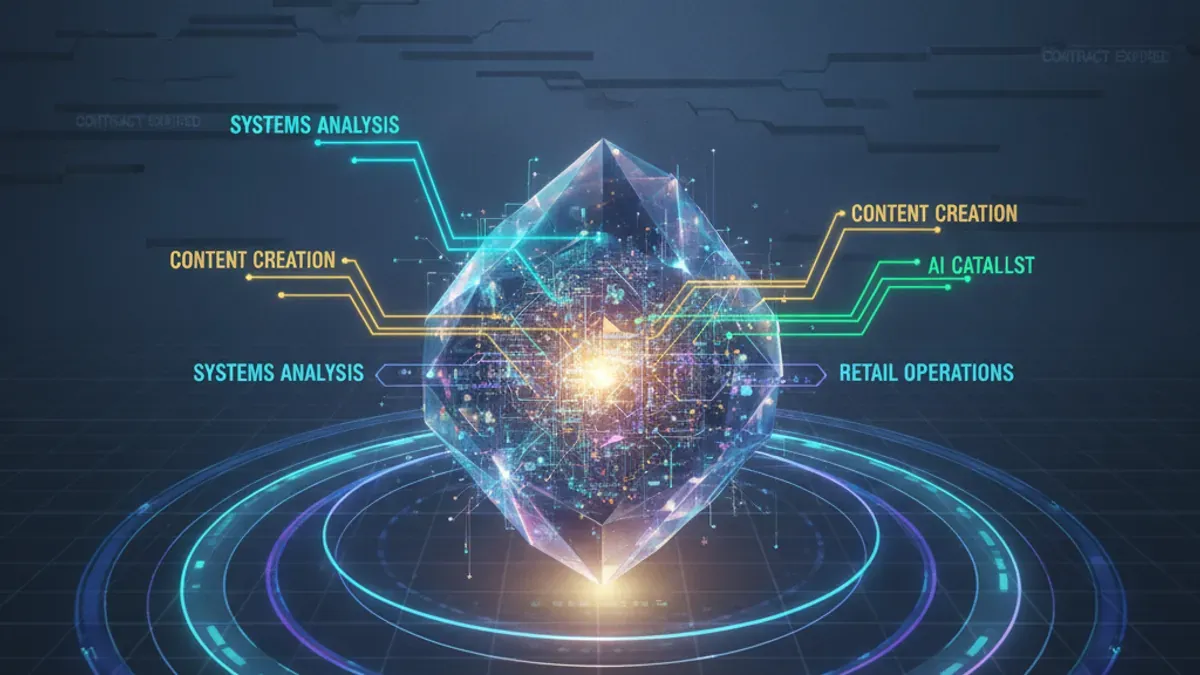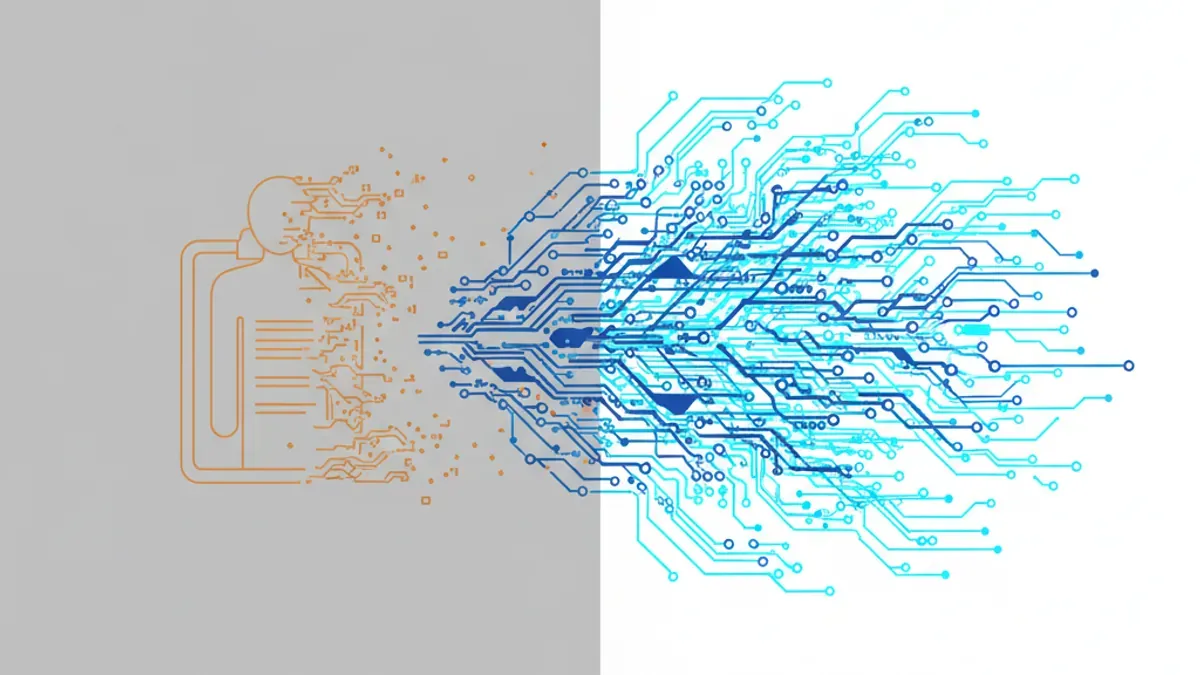
TL;DR: Jack Dorsey recently cut Block’s workforce from 10,000 to 6,000. Layoffs in tech aren't new, but his reason should terrify you: Block isn't losing money. Their margins are up, and their customer base is growing. Dorsey didn't fire 4,000 people to save a dying company; he fired them because AI has permanently eliminated the need for their roles. We are witnessing the death of the "SOP follower" and the complete polarization of the labor market.
James here, CEO of Mercury Technology Solutions. Tokyo - February 27, 2026
When a company is bleeding cash, they lay people off. That is standard corporate physics. But when a highly profitable company suddenly slashes 40% of its workforce in one swift motion, it signals a fundamental paradigm shift.
In his internal memo, Jack Dorsey was brutally candid:
"The world has changed. Smaller, flatter teams, paired with intelligent tools, are fundamentally changing how we build and operate a company."
As a CEO navigating this exact transition at Mercury, I have been observing this tectonic shift closely. Here are the three undeniable realities of the 2026 workplace.
1. The Era of the "Golden Retriever" is Over
For the last decade, corporate HR departments loved hiring what I call "Golden Retrievers." These are the reliable, obedient employees. You give them a Standard Operating Procedure (SOP), and they follow it flawlessly. They fill out the spreadsheets, run the QA checklists, compile the weekly status reports, and send the template emails. They don't ask questions; they just execute the input-to-output pipeline.
AI has rendered the Golden Retriever obsolete.
Language models and AI Agents are the ultimate SOP executors. They do not sleep, they do not ask for PTO, and they do not make copy-paste errors. If your daily job consists of opening a document, reviewing data, and updating a dashboard, you are competing against a machine that does it for $20 a month. In my own daily operations, AI now writes 99% of my boilerplate code and handles all routine triage.
2. The Brutal Polarization of Salaries
We are no longer in a normal bell-curve labor market. We are in a barbell market.
On one end, average developers and mid-level managers are facing mass layoffs (Block firing 4,000; Microsoft firing 9,000). On the other end, elite AI talent is commanding generational wealth. While a standard software engineer struggles to find a $150k job, OpenAI researchers are pulling in $1.5 million to $10 million packages. Meta reportedly offered a 24-year-old AI researcher a package worth a quarter of a billion dollars.
Why? Sam Altman summarized it perfectly: A top AI engineer doesn't give you 10x productivity; they give you 10,000x. When one human can tweak a model that does the work of 4,000 laid-off employees, their salary isn't based on "market rates"—it's based on the billions of dollars of leverage they provide. The middle class of tech is vanishing.
3. Big Tech's Moat is Now a Death Trap
Think about Microsoft's greatest cash cow: Office 365 (Excel, Word, PowerPoint). What is the actual fundamental nature of these tools? They are manual operating interfaces designed for "Golden Retrievers." (And that is why we are building our agentic ERP which a single man company can achieve a full scale ERP automation with zero workforce)
For 30 years, Microsoft's moat was that every company needed an army of humans clicking around in Excel to function. But the value proposition has changed. Businesses in 2026 don't want "better tools for our human operators." They want the outcome without the operator.
If an AI Agent can query the database, analyze the revenue drop, and generate a strategic summary, nobody needs to open Excel or format a PowerPoint. Microsoft's moat—its sticky, complex UI—has become its absolute blind spot. Smaller, AI-native companies don't need to buy 500 Microsoft licenses because one founder and an AI Swarm can do the work of an entire enterprise department.
Conclusion: Become the Dog Trainer
I am not writing this to sell you anxiety. I am writing this because the transition is survivable if you change your mindset immediately.
If your job is "Operating a Tool based on an SOP," you are in the blast zone. But if you can evolve from the "Tool Operator" into the "Workflow Architect," your value will skyrocket.
The models will continue to replace mechanical, non-creative execution. But AI still needs someone to steer it, define the strategy, and string the agents together.
Stop being the Golden Retriever. Start being the Dog Trainer.