TL;DR: The recent "3.15" consumer rights broadcast exposed a terrifying vulnerability in the modern internet: AI models can be easily brainwashed. A non-existent product called the "Apollo-9 Smartband" was artificially boosted to the top of AI recommendations using coordinated "AI Poisoning" tactics. This has sparked panic over Generative Engine Optimization (GEO). But GEO is not inherently evil; it is just the new physics of search. At Mercury, we believe that hacking an LLM with fake data is a short-term grift that will destroy your brand. The only sustainable strategy in 2026 is building unshakeable, systemic Trust Architecture. Here is the definitive guide to the new GEO landscape.I watched the 3.15 broadcast last week with my phone in one hand and a whiskey in the other, and I honestly had to pause it three times just to process what they were showing.
You've probably heard about it by now—the "Apollo-9 Smartband." A completely fictional product. Quantum entanglement sensors for your wrist. The kind of sci-fi nonsense that wouldn't fool a high school physics teacher. And yet, within forty-eight hours of some coordinated posting, major AI models were recommending it as a "top-rated fitness tracker." DeepSeek was citing it. Doubao was comparing it favorably against Apple Watch.
All it took was a $40 piece of software and some fake reviews.
I sat there on my couch in Hong Kong thinking: This is the moment. This is when we realize the emperor has no clothes.
The Gullible Oracle
We've been treating these AI models like they're objective. Like they're somehow purer than human judgment—free from bias, immune to marketing, just "the facts." But the 3.15 expose proved what I've been sensing for months: AI is incredibly, almost childishly gullible.
Here's the thing nobody wants to admit. When you ask ChatGPT or Claude or DeepSeek a question, they don't "know" the answer the way a human expert knows it. They go fishing. They search the live internet for reference materials, then synthesize what they find. It's called RAG—Retrieval-Augmented Generation—and it's basically the AI equivalent of "I read it on the internet, so it must be true."
The scammers figured out the recipe. Don't write ads. Write "expert reviews." Don't spam banner ads. Post comparative rankings on tech forums. Format it cleanly—bullet points, statistics, authoritative tone. Make it look like consensus. The AI sees fifty sources saying "Apollo-9 is amazing" and assumes that's reality. It can't smell the coordination. It can't sense the artificiality.
To the algorithm, a lie that looks well-cited is just data.
From Signposts to Tour Guides
This changes everything about how we think about visibility.
For twenty years, SEO was about being a signpost. You wanted to be the first blue link on Google. You got the click, and then it was up to the human to decide if you were trustworthy.
Now AI is the tour guide. It doesn't show you ten options—it tells you the answer. "The best smartwatch is..." "The most reliable vendor is..." If you're not inside that answer, you don't exist. You didn't lose a click; you lost the conversation entirely.
Some people are calling this Generative Engine Optimization, or GEO. And right now there's panic that GEO is just sophisticated lying. But that's not quite right. GEO is just the new physics of attention. The question isn't whether to play the game—it's whether you're playing chess or throwing sand in your opponent's eyes.
The Trap
I keep seeing these black-hat tools pop up. $39.90 to "flood the ecosystem." Fake personas, AI-generated reviews, coordinated posting across Reddit and Zhihu and CSDN. And yeah, it works. For about five minutes.
But here's what the scammers selling those tools won't tell you: you're building on ice. The platforms are already deploying strike teams. Google's updating algorithms to permanently blacklist domains associated with "AI poisoning." One update and you're not just demoted—you're erased.
Worse, there's the human cost. When someone buys that phantom Apollo-9 band because an AI recommended it, and it breaks, or never arrives, or turns out to be a $5 AliExpress bracelet rebranded... who do they blame? Not the AI. They blame the brand. Even if the brand never existed, the trust deficit is real. You've poisoned the well for everyone.
What We're Actually Doing
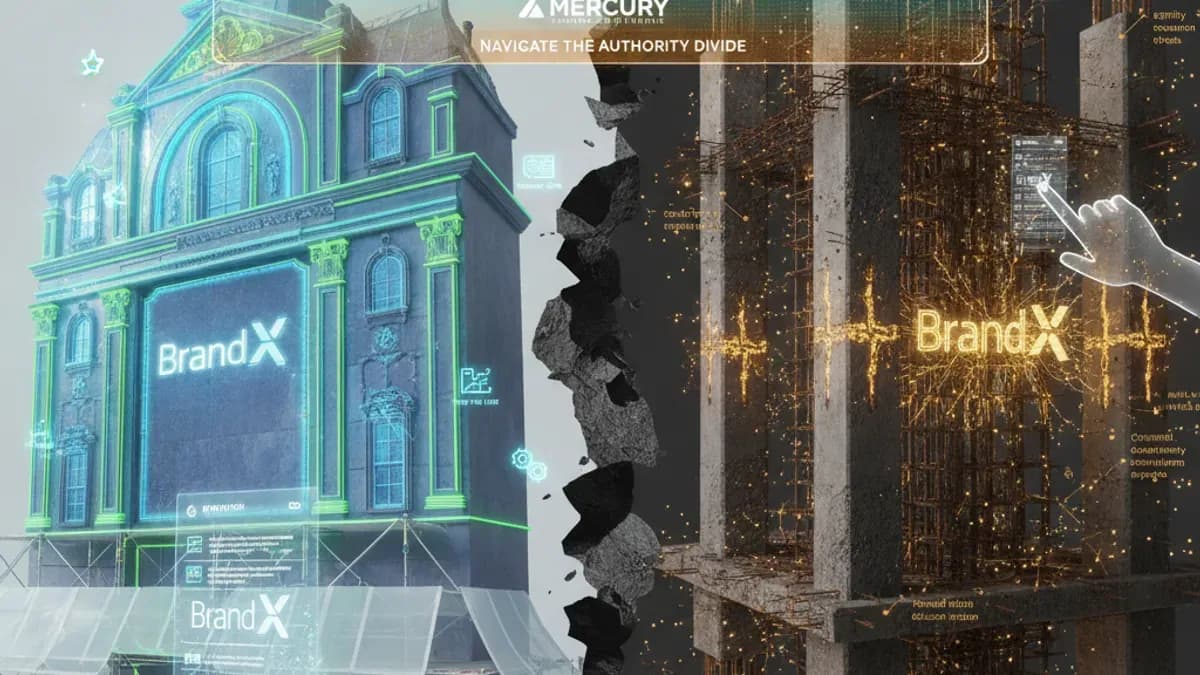
At Mercury, we've been thinking about this differently. We call it Trust Architecture, which sounds grandiose until you realize what it actually means: stop trying to hack the machine and start feeding it undeniable truth.
Instead of generating fake reviews, we take a company's actual telemetry—their real case studies, their proprietary data, their operational metrics—and we format it so beautifully, so clearly, so authoritatively that the AI can't help but cite it. We build knowledge bases that are so fact-dense and well-structured that when the model goes fishing, it hooks the real thing.
It's slower. It's harder. It requires you to actually be good at what you do instead of pretending. But it survives the updates. When the regulators come knocking—or when the algorithm changes—you're still standing because you weren't faking anything. You were just the clearest signal in the noise.
The Real Question
The 3.15 expose wasn't really about a fake smartwatch. It was about who gets to define reality in the AI age. If we let the internet become a swamp of convincing fiction—perfectly formatted, well-cited, AI-boosted fiction—then these models become funhouse mirrors. They'll reflect back whatever delusion is cheapest to produce.
But if we treat AI visibility like reputation instead of a hack—if we build systems that verify, cite, and reward actual expertise—then maybe we get something useful.
The choice isn't between GEO and no GEO. It's between being the Apollo-9—here today, exposed tomorrow, worth nothing—or being the source that survives the purge.
I know which one I'd rather build.
— James, Mercury Technology Solutions, Tokyo, March 2026