The Lighthouse Principle: Education in the Age of AI Answers
TL;DR: Twenty-five Fields Medalists — Terence Tao among them — signed a joint statement this month titled, roughly, The Serious Misalignment of AI in Mathematics. The headlines wrote themselves: mathematicians attack OpenAI. Read the statement instead of the headlines and it's a stranger, more important document: it opens by congratulating AI. The signatories' fear is not that the machine computes wrongly. It's that the machine computes correctly, at scale, and that when it does, human beings might learn nothing. That is not an AI-safety brief. It is the first serious alarm about the future of education in an era of free answers — because when answers become free, understanding becomes the scarce factor of production, and everything we call schooling was built on the opposite assumption.
James here, CEO of Mercury Technology Solutions.
Hong Kong — September 2026
The Lighthouse and the Lightbulb
First, clear the strawman: these are not old men defending a guild. Tao has stress-tested frontier models on mathematics longer than almost anyone alive, demonstrated AI-assisted problem-solving on YouTube, and — the same week he posted the warning on his blog — also posted the rules for a public competition that explicitly welcomes AI tools. A man doesn't guard the territory he's holding open house in.
What the statement actually says: recent months have seen language models crack major open problems across multiple fields of mathematics. Acknowledged, verified, congratulated. Then the question nobody else is asking: AI got it right — so is the trouble over?
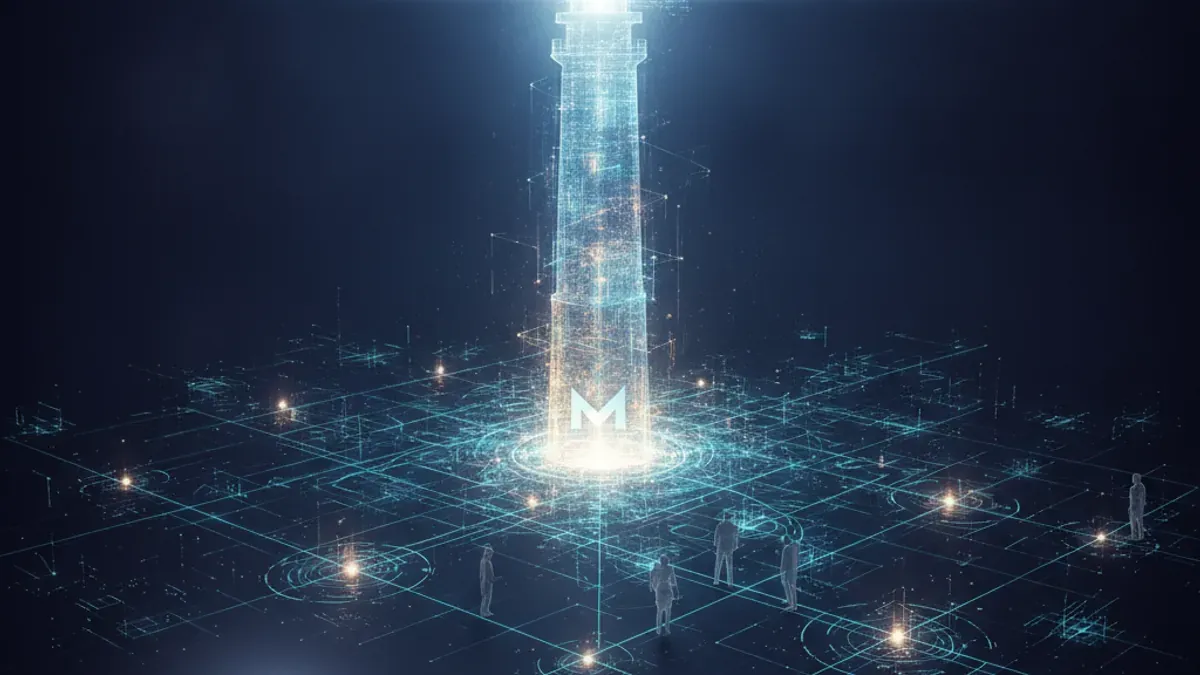
The statement's central metaphor is the whole argument. Outsiders treat famous unsolved problems — Fermat, Riemann, twin primes — as peaks: plant the flag, game over. The mathematicians describe them as lighthouses. A lighthouse marks unexplored territory. Generations sail toward it, and in sailing they build docks, instruments, navigation methods — and those remain for everyone after the light is reached. Fermat's Last Theorem fell in 1994; the three and a half centuries of algebraic number theory built while sailing toward it are still load-bearing mathematics today. The answer was one sentence. The journey was the industry.
The essay circulating the Chinese-language version of this story says it in one line, and it deserves translation: 照著燈塔找路,和直接把燈泡擰下來,是兩回事 — navigating by the lighthouse and unscrewing the bulb are two different things. Benchmark culture — 跑分, running the score, treating centuries-old conjectures like a phone's benchmark suite — is bulb-stealing at scale. You get light once. You lose navigation forever.
Perelman's Gap
The sharpest formulation came not from the twenty-five but from a comment under their statement, quoted in the coverage: give me a ten-million-line, machine-verified proof of the twin prime conjecture, and my knowledge increases by approximately zero. I already believed it was true; I even roughly knew why. Now I additionally know that AI proved it. And then what?
Machine verification and human understanding are not the same product. Here the statement's implicit point is proven by history. In 2002–2003, Grigori Perelman posted three sketchy preprints online, outline-style, steps waved past, no journal, no polished argument — solving a hundred-year-old problem, the Poincaré conjecture. The answer was public, free, and correct in 2003. What followed was three years of some of the best mathematicians alive doing the actual work: filling in every step, reconstructing hundreds of pages of detailed argument, seminar by seminar, until around 2006 the result became knowledge — something a community could stand on and build the next floor.
Call it Perelman's Gap: the distance between correct and understood. It took three years and the world's best minds to cross it for one proof. That gap is where science actually lives — and it is also where education lives, because the crossing is the capability. AI compresses output. It does not compress comprehension. AI can write the proof; it cannot read it for you.
Students Before Ideas
The statement's most radical sentence isn't about proofs at all: the field's most precious resource, it says, is students and ideas — in that order. Students, before ideas.
Why would the masters of a subject rank learners above theorems? Because of a practice every mathematician knows and no outsider suspects: advisors deliberately assign students problems whose answers the advisor already possesses — sometimes problems solved decades ago, sitting in the literature. The answer was never the deliverable. The deliverable is what happens to the student en route: hitting the wall, 撞南牆, taking the long detour, and maybe at three in the morning, suddenly seeing it. The struggle is not the cost of the assignment. The struggle is the assignment.
Now place the answer on the table — free, instant, correct, for everyone, always. The assignment's purpose evaporates on contact. And the statement is careful to say what every honest person already knows: this is not the students' failure of character. A problem resists you for three days while a machine offers the route in three seconds — only a saint declines, and saints make poor researchers. The failure is architectural. Every assessment ever built on known-answer problems — homework, problem sets, most exams, half of every degree — just silently obsoleted itself. We just haven't updated the syllabus to admit it.
Here is the inversion that should anchor every education-policy argument for the next decade. Nine days ago I wrote about the 2% Rule: in industry, the 98% of cost wrapped around a rocket's raw materials — process, ceremony, fear — is overhead, and progress means deleting it. Education is the one domain where the surgery is fatal, because in learning, the 98% struggle is not overhead. It is the product. Answers are the raw materials now, and they cost almost nothing. Everything that matters is manufactured in the part of the process AI is best at eliminating.
The New Curriculum: Life After AI Answers
So what does education look like on the far side of Perelman's Gap? Not students speed-running answer production against machines that produce answers a billion times faster. The curriculum flips:
From writing answers to auditing them. The new core literacy is verification: read the machine's proof, find the gap, check the attribution, decide whether it generalizes. The "middle work" the mathematicians fear will be skipped — writing clearly, extracting the method, mapping what else it touches — stops being the chore and becomes the coursework. Feynman's rule inverts for this era: what I cannot verify and build upon, I do not understand.
From solved problems to live ones. When known-answer exercises are dead as training, the classroom moves to problems with no answer yet — Perelman-mode reading seminars, real datasets, live engineering, where the model is a sparring partner and the student's job is to know when it's wrong. Euclid supposedly told a king there is no royal road to geometry. There is now a royal road to answers. Understanding still walks.
Protect the struggle on purpose. If the wall is the pedagogy, answer-withholding becomes a teaching technology, not nostalgia. Design curricula that make students sail toward lighthouses — with AI aboard as navigator, but with the student holding the wheel, because the route is what trains the navigator of tomorrow. Deliberate difficulty, deliberately rationed hints, effort measured and rewarded as such.
Score capability, not output. A school that keeps grading answer production is a phone running a benchmark it already lost. Grade what a student can do with an answer they didn't generate: break it, extend it, transfer it, teach it back. The measure of an education was never the archive of theorems a graduate carries — it's the mathematician the process manufactured.
The AI Misalignment Is Ours Too
The medalists close with a restraint that should sting: what this technology brings, they write, depends largely on the decisions of those who control it — and mathematics is simply the first domain where the question arrives. Every form of mental labor, and every institution built to train humans for it, faces the same fork. Optimize for the leaderboard — answers produced, problems cleared, grades issued — or optimize for the lighthouse: navigators made.
Twenty-five mathematicians will not slow the benchmarks down, and they know it; the training value of hard mathematics is too real. But that was never the point of the statement. The point was the question underneath it, and it lands on parents, teachers, and every institution in the AI answer business: the answer was never the product. The mathematician was. The student was.
The bulb is on the table now, free to everyone. The lighthouse still has to be walked to — and the walking is where we are made.
Mercury Technology Solutions: Accelerate Digitality.