James here, CEO of Mercury Technology Solutions. Hong Kong — April 7, 2026
A few days ago, while re-watching the latest season of Jujutsu Kaisen, I had a sudden architectural realization.
Right now, using AI agents like Claude Code or Codex, complete outsiders with zero programming background can suddenly build functioning applications. This macroeconomic shift—where "anyone can build anything" overnight—is not just a technological leap.
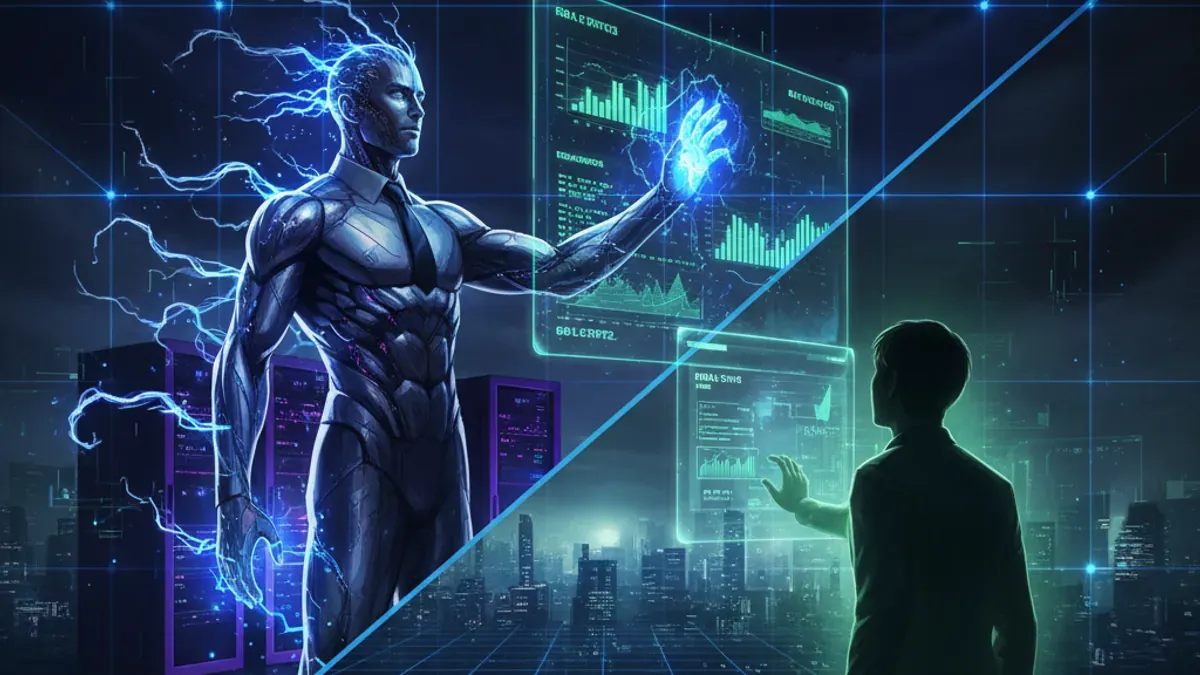
Structurally speaking, we are living in the Culling Game.
I am not joking. The systemic parallels are terrifyingly accurate. For those who dropped the anime because the Culling Game rules felt too convoluted, let me break it down into plain business strategy.
Part 1: The Brutal Similarities
1. The Forced Awakening of "Techniques"
The Culling Game begins with an ancient antagonist, Kenjaku, permanently altering human brains so they can wield powers. It doesn't matter if the person wanted it.
AI coding agents are the exact same mechanism. Suddenly, the "ability to build software"—a power previously restricted to elite engineers—has been dropped into the laps of the general public. And just like Kenjaku’s victims, you don't have a choice. Even if you refuse to use AI, your competitors will. The entire global market now operates on the baseline assumption that everyone possesses this cursed technique. It is a forced awakening.
2. The Illusion of the Great Equalizer (Why the Class Divide is Widening)
Back in the early ChatGPT days of 2023, I was a naive optimist. I believed AI would act as the ultimate equalizer, instantly closing the gap between a rookie and an elite grandmaster.
But as we navigate 2026, I have realized the exact opposite is true: The AI Culling Game will violently accelerate class stratification. In Jujutsu Kaisen, an ordinary civilian who awakens a technique is still at a massive disadvantage against the elite Sorcerer Families (like the Zen'in clan), who enter the game armed with vast wealth and Special Grade Cursed Tools. In the AI era, this economic disparity manifests in two brutal ways:
- The Capital Requirement: Elite models, premium hardware, and agentic workflows require resources. As global compute demand skyrockets this year, the financial barrier to entry for top-tier AI will only rise.
- The ROI Asymmetry: This is the most ruthless reality. If you are already a business owner, executive, or asset allocator, the motivation to invest in AI is absolute. Paying $200 a month for Claude Code Max, or buying a dedicated Mac Mini to run an autonomous open-source agent (like OpenClaw/Lobster), is a rounding error when it saves you $500,000 in payroll. The rich invest heavily because the ROI is exponential.
- But if you are a standard employee with no equity and no business to scale, your mindset is entirely different. You look at a $200/month subscription and think: "Why should I spend my own money to do company work? I'll just wait for my boss to buy me a license." This hesitation is fatal. The asset class aggressively buys the premium "Cursed Tools" and scales their leverage, while the working class waits for permission. The world is becoming more rigid, not more equal.
3. Awakening Does Not Equal Winning
This compounds the tragedy. Claude Code can output a "functioning prototype." But there is a massive, impenetrable barrier between a "functioning prototype" and a "product people actually want to buy." System architecture, UI/UX psychology, and business logic are not solved by simply generating code. A rookie with an AI agent stepping into the market against a veteran product team is going to get slaughtered. Awakening your technique and knowing how to fight are two entirely different realities.
4. The Game Masters Do Not Care About You
Kenjaku did not start the Culling Game because he enjoys watching people fight. His true goal is to force the evolution of humanity by merging them with Tengen. The players fighting and dying are just generating the necessary "cursed energy" to power the merger.
Look at the AI platform providers. Anthropic, OpenAI, Google—they honestly do not care if your specific SaaS app succeeds or fails. They are watching the macro-behavior: how humans adapt to AI, where they get stuck, and what data they generate. Your desperate struggles inside Claude Code are just training data accelerating their path to AGI. You are a battery.
5. The Rules Change Mid-Game
In the Culling Game, players can spend 100 points to add new rules, fundamentally altering the physics of the battlefield in real-time. The AI era is even more extreme. New frontier models drop monthly. API structures change overnight. The "best practices" you learned in February are entirely obsolete by April.
Part 2: The Critical Differences (Where the Hope Lives)
If you stop the analysis there, it sounds bleak. But the differences are where you find your strategic arbitrage.
- It is NOT a Zero-Sum Game: In the anime, you survive by killing other players. In the AI era, because everyone has the power to build, the market itself is expanding. Tiny, niche problems that were previously "too expensive" to solve with traditional engineering teams are now highly profitable micro-SaaS opportunities. You don't win by killing the strong; you win by finding empty battlefields.
- You Won't Actually Die: If you don't score points in the Culling Game, your technique is stripped and you die. If you build a terrible app with Claude Code, nothing happens. The cost of failure has plummeted to zero. In the anime, caution is a virtue. In the AI era, extreme iteration is the only virtue. You can launch 100 failures for free until one hits.
Part 3: How to Survive the AI Culling Game
If we are all trapped in this arena, how do we survive? The characters in Jujutsu Kaisen give us the exact operational playbook.
- Define Your Own Cursed Technique: The lawyer Higuruma survived because he instantly understood the exact mechanics of his "Judgment" technique. "AI can do anything" is a lie. AI can only build things. Your actual cursed technique is your proprietary domain knowledge, your industry experience, and your unique frustrations. AI is just the conduit. Figure out what your unique edge is first.
- Choose Your Colony Wisely: Do not fight in Tokyo No. 1 Colony where the heavy hitters (Google, Meta, Microsoft) are brawling. Take your AI tools to the boring, empty colonies. Solve hyper-specific problems in logistics, dentistry, or local manufacturing. Win where the giants aren't looking.
- Train Adaptability, Not Tool Mastery: When the rules change weekly, mastering today's UI of a specific AI tool is useless. The characters who survive the Culling Game are the ones with incredible combat fundamentals. Your fundamentals are: problem-definition, logical articulation, and psychological resilience.
- Do Not Be a Pawn: The smartest characters in the show (Yuta and Higuruma) participated in the game, but they refused to play Kenjaku's script. They exploited the rules to achieve their own independent goals. Use OpenAI's models. Use Anthropic's agents. But build your own enterprise value. Do not just become a data-generator for their ultimate merger.
The manga has ended, but our Culling Game is just getting started. The rules haven't even fully initialized yet.
Figure out your domain. Define your technique. And when the market asks if you can survive the AI transition, I want you to be able to look at them and say exactly what Satoru Gojo would say:
"Nah, I'd win."